The HBO mini-series based on Stephen Ambrose's unit history of Easy Coy 506 Rgt interests a lot of visitors from all over the world. This itinerary covers most of the E coy sites depicted in the mini-series.
I planed the route from Bayeux with a first exit out of the N13 to Angoville au Plain toward Sainte-Marie-du-Mont. When on D 913 turn right, after about a mile and follow the sign to Angoville.
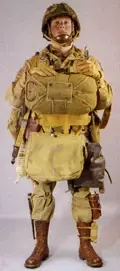
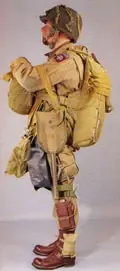
Depending on weapon carried one or more of the following will be required:
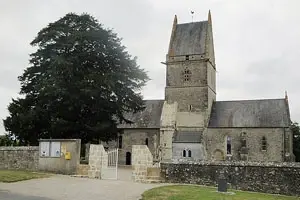
Coming in the village, ahead of is the church where Bob Wright and Kenneth Moore, two Medics from the 501 Rgt, 101st Division took care of 80 American, German wounded men and a child.
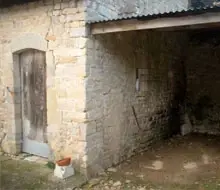
On your right, just before the Memorial is a farm where Col. Bob Sink, the commander of the 2/506th was in.
Beyond the farmhouse on the right is a very large open field use as a huge drop zone for many of the 101st men, as well as many from the 82nd.
The village was not secured for many hours and German patrols entered the church on at least two occasions, and Wright and Moore ordered them to leave their guns outside or to leave the church.
Incredibly, the Germans did. Eventually, the area was secured and many of the wounded were evacuated, but two died in the church. When you enter the church, look for a hidden doorway acceding to the steeple. From that door, on the 7th, two Germans soldiers show up and surrendered!
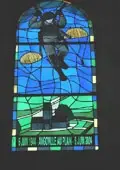
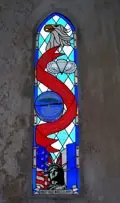
This stained glass window was dedicated in 2004 as a memorial to Ken Moore and Bob Wright and to the town of Angoville-au-Plain. This window, and a few others were shipped for free by DHL, which apparently was the only shipper who would handle this project.
Each year, the town celebrates the bravery and humanity of the two medics who treated wounded regardless of their side.
The Screaming Eagle window was dedicated in 2006.
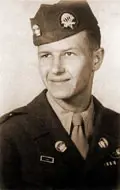
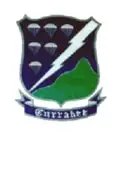
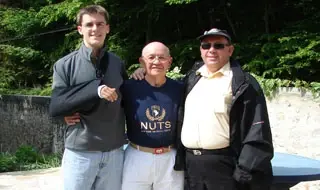
Bob Wright 1944. Bob Wright, Tyler Biggler, and Francois on June 6th 2006.
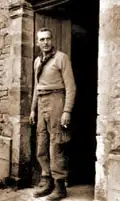
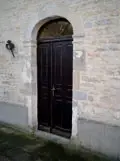
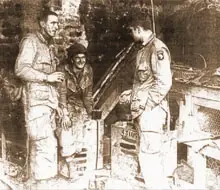
Picture shows Bob Sink standing outside the main door, of his second command post upon arriving in Normandy. He probably landed in between Vierville and Le Grand Chemin south of Foucarville where Major Strayer, Captains Nixon, Hester and Gross also landed with another 700 men.
Here is now a great story about Bob Sink and his jeep crew as they drove west from their drop zone towards Saint-Côme-du-Mont.
One mile southwest of Vierville their jeep sped past a large enemy horse park; they were right on top of the encampment before they realized it. There was a sentry standing at the gate and they shot him down as they whipped by. The driver had stepped on the gas, not realizing that he was moving into a cul de sac. Ahead, and alongside, B. Sink suddenly became aware of Germans rising from out of the ditches on both sides of the road; the jeep was moving right down the centre of an enemy column which had just fallen out. B. Sink and Hannah fired their pistols; the driver worked his carbine with one hand and held the wheel with the other. The enemy was taken wholly by surprise, and instead of returning the fire instantly, they either ran or dropped into the ditches. But more of the enemy were rising from the ditches up ahead and B. Sink realized that their luck couldn't last. They had run past troops for about 200 yards, but if they kept going they would surely be killed. There was a crossroads just in front of them. B. Sink yelled to the driver to get the jeep around as fast as he could. They came back down the line, still firing their weapons. Once again they sped past the horse park. Then they were safely out of it, amazed that they had cleared the danger without one aimed shot being fired at them and soon got back to the CP.
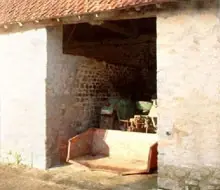
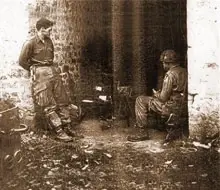
From Angoville, drive back to D 913 through Operation Chicago site (assault of Vierville by the 101st Airborne Division during the night) towards Utah Beach, pass Sainte-Marie-du-Mont. Along Pvt Sonnier Road, at the cross road turn left to Pvt Collins Road then the first small road to your left at le Grand Chemin hamlet. Another few hundred yard to get to Brecourt Manor. E coy fought one of its most important battles.
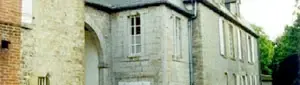
In a field between Grand Chemin and Brecourt Manor, a hedgerow bordered with a ditch limit the property. Spaced at intervals along that ditch, were 4 German cannon batteries consisting of 105mm Howitzer guns. They were manned by the709. Inf.-Div. and potentially supporting III. Btl. and 13. Kp. Gren.-Regt. 1058. The guns were zeroed in on U.S. forces landing on Utah Beach, near Exit 2. Lt. Dick Winters of Easy Company led a small group of Easy Company men to this site, and systematically took out all four guns at this site, and was awarded the Distinguished Medal of Honor for this attack. Several other of his men were also awarded medals for their actions as well.
It is said that the strategic tactics employed by Lt. Winters at this particular field are now taught at the American West Point Academy.
A little resume of the attack: Ranny and Lipton, with covering fire from Liebgott, Hendrix, Plesha and Petty laid shot at the machine gun and gun number one. They were past the far hedgerow. Winters and his men charged in at the corner from the other side of the far hedgerow, Guarnere, Compton and Malarkey at the end of the hedgerow on the right. Out in the field to the left is where Malarkey ran to pick up a luger from a dead German.
To the north end of the field, a 105mm gun was pointed to the north northwest, directed towards causeways 3 and 4. In the direction of Saint-Marcouf and Ravenauville.
Across the field were 2 MG 42 threat. Winters had Petty and Liebott open up with their machine gun to draw the German's fire. Once the German's opened up, Guarnere, Compton and Malarkey attacked the machine gun to the right from a hedgerow, tossing grenades and then jumping in, cleaning out the MG team.
At the moment the MG went down, Winters led a small team, including Lorraine, Toye and Wynn, into the MG position and then straight on into the first gun. At the first gun, the crew started to run towards where I was standing when I took this picture. They were cut down. You might remember the true story from the Band of Brothers series where he ran out to the German, realized he messed up and where the Germans stopped firing because they thought he was a medic. Then, as he tried running back, they all opened up and he just made it to the gun position right ahead of me here.
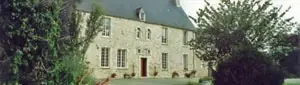
Midway from Vierville and Holdy Corner on D 329, Caloville Farm is located in the first cross road from Vierville to Hiéville. This farm was use by Col. Sink as his first CP. Also many paratroopers gather there including Dick Winters and had their first mass on June 6th in the morning. You might remember two important scenes from the miniseries, though only one is real. Sainte-Marie-du-Mont is the town where, at night, Dick Winters looked into the distance and prayed to god to see him through the war and promised to find a peaceful spot to live out the rest of his life. One scene that wasn't true was Dick Winters having a drink while the guys were in the back of the truck. Winters wrote that he had his sip of Calvados (local apple cider) after Brecourt Manor. The D 913 was the strategic town depicted in the eponymous episode of Band of Brothers.
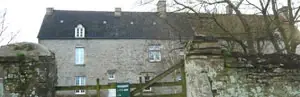
On June 6th 1944 , about 30 German prisoners were in custody of 12 paratroopers of the 101 Airborne .Most of them were from Ost Batallion 795 and are Georgians , they were wounded more or less badly and found a shelter in the farm Birette ; after 8 hours, Bernardin Birette's son was requested to move away. Upon his return he saw bodies on the ground, apparently executed.
Their bodies were left more than 15 days in the sun and rolled over by tanks and GMC!!!! I do not have any document confirming this fact, only eye witnesses.
This farm was also used as a CP for the 4th Division.
On June 6th 1944 at 1.00 pm was established in this farm the first Command Post for Lt. Gen. Lawton Collins.
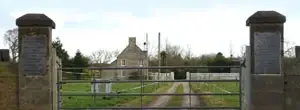
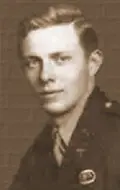
This is Lieutenant Meehan, who was killed along with everyone aboard STIC 66 on D-Day.
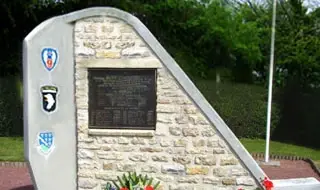
This is a letter written by Thomas Meehan for his wife that was handed out of the door of his C-47 only moments before the invasion of Normandy was to begin.
It read: “June 5th, 1944. Dearest Anne, In a few hours I'm going to take the best company of men in the world into France. We'll give the bastards hell. Strangely I'm not particularly scared, but in my heart is a terrific longing to hold you in my arms. I love you Sweetheart - forever Your Tom”
Lt. Meehan replaced Captain Sobel and was the original Easy Company combat leader before Lt. Winters. On June 5, 1st Lieutenant Thomas Meehan III boarded a C-47 to parachute into Normandy. Prior to the jump however, he had just been appointed «E» Company Commander, replacing Captain Sobel. Meehan was in plane 66, along with the Company's staff comprised of 16 paratroopers.
His plane crashed in a field at Beuzeville-au-Plain.
The miniseries has the plane catching on fire and crashing but that's not the real story. Apparently, the plane was damaged badly and the pilot actually tried to land with his landing lights on. He hit a nearby hedgerow and the plane exploded killing all on board. A tour of the site of this crash will enable you to see the monument erected in memory of Lt. Meehan, but also the field where the crash actually occurred.
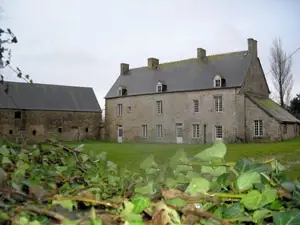
Marmion Farm
The very first newsreel of the airborne invasion in Normandy shown in movie theatres in the United States was filmed at this particular farmhouse. Some of the photos show Stopka's task force displaying the first Nazi flag captured by the 101st Airborne Division.
Many famous photographs in D-Day and WWII books were taken at this site, where troopers gathered after they landed in Normandy.
Private Guth interviewed
At 0110, June 6, 1944, Pfc Forrest «Goody» L. Guth hit the silk over Normandy. The best «Easy Company» could pull together after the jump was around a dozen men - our Coy, 1st Lt. T. Meehan III, O-437484, and most of Hq personnel never reported to the assembly area and were not seen again (Aircraft #66 was hit by flak and crashed, killing all its 21 occupants)! I landed in a cow pasture, about 3 miles off target, somewhere between Ravenoville and the beach, and around dawn ran into more men from my stick. After trying to figure out what to do, we started moving toward Ravenoville searching for the rest of «Easy». At the southern edge of the village stood a «square» farmhouse used by the Germans (Marmion Farm), the four of us, together with stragglers from different outfits and under leadership of Major John P. Stopka, 3d Bn, 502d PIR (KIA in the Bulge Jan 14, 1945), captured the stronghold - that's the place where the 101st Airborne displayed the first nazi flag captured by our Division! Just hours after the D-Day invasion began, James Flanagan, center, with other paratroopers of the 101st Airborne Division, captured a Nazi flag from a command post headquarters in a farm complex near Ravenoville. The paratroopers had landed in the middle of the night to eliminate German resistance along the causeways to Utah Beach (National Archives).
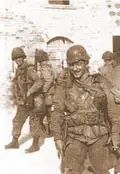
Forrest Guth, is clowning around here with a Nazi helmet on June 7th.
James Flanagan parachuted into Normandy hours before the U.S. Army's 4th Infantry Division was to land at Utah Beach on June 6, 1944. He and his fellow airborne soldiers came down in the middle of the night, charged with removing any German resistance along the vulnerable causeways that led inland from the beach. They would be the prelude to the largest amphibious invasion in history.
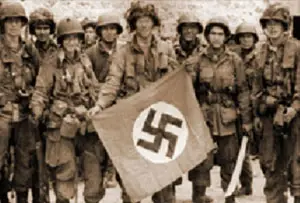
After landing near Ravenoville, France, the first vehicle that the paratrooper saw later in the morning while mopping up near a captured farm complex was coming from the beach and carrying two men, one an International News Service photographer. It was 9 a.m., about three hours into «the longest day» in history. The soldiers took a brief timeout so that the photographer could record the event. Flanagan, in the center, smiled while clutching the Nazi flag that had been «liberated» from the enemy command post headquarters in the farm complex they now occupied. When this picture was wired back to the States, it became one of the most widely distributed newspaper photos taken from the events of June 6.
WWII: Once on the ground, how did you proceed?
Flanagan: Using my clicker [cricket], I started looking for company. At first I didn't recognize my position from the maps that I had previously studied. I heard some shooting, so I began moving toward Ravenoville. The firing was coming from a German MG42 machine gun. The person pulling the trigger, however, wasn't a very good shot. The Army had trained me how to crawl so that I was only 4 inches off the ground, so I did. Soon there was more activity. I began recognizing the sounds of our M-1s. By way of moonlight, using my clicker, I began joining up with troops from other companies and regiments. By dawn, there were about 20 of us. We didn't know each other, but a major [Major John P. Stopka, 3/502nd] came over and organized us into a group and led us on an attack of a German garrison at a farm complex [Marmion] at Ravenoville. This was also the location of the German MG42 that had been firing on us. The Germans were about platoon size in strength. The battle lasted for about an hour and a half. Once the farm complex was captured, the major had us running patrols around the outlying areas in order to keep the Germans from sneaking up on us. We maintained outposts and patrols until we were relieved later in the day. We also had a dozen prisoners who we had to contend with. By noon, the 4th Infantry Division had arrived from Utah Beach, and we were relieved. I spent the night of June 6 at Ravenoville. By June 7, I was back with my regiment and company, where I was assigned to patrols in and around the 502nd's areas of responsibility in Normandy near Houseville. We would patrol the area and try to clean out remaining German defenders. We ran around the bush. They ambushed us, and we ambushed them. This went on for several days.
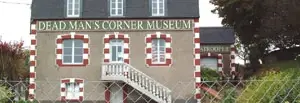
Saint-Côme-du-Mont was one of the major objectives to reach Carentan after capturing and destroying the bridges on Carentan causeway.
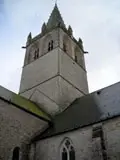
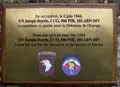
Several attempts had been made to take Saint-Côme-du-Mont. On D-Day Captain Samuel Gibbons and 50 soldiers tried and failed to take the town. «The Germans were in the town and they were in strength» (John C. McManus, page 100). During one of the attempts, an American M5 Stuart light Tank was hit by an armor piercing shell, the whole crew was killed instantly, the tank commander's burnt corpse was partially sticking out of the turret. The intersection where this incident occurred became known as «Dead Man's Corner» and is still referred to by that name. The key to really understand this action is to visit Dead Man's Corner Museum. The real attack on Saint-Côme-du-Mont took place at 4.45 am on June 8th, led by General Taylor. Two Battalions of the 506th came in from the North. The 501st's 3rd Battalion and the 1st battalion of the 401st Glider Infantry closed in from the east. A barrage of 75mm and 105mm artillery was laid down by the 65th armored Field Artillery Battalion, and the 101st's own 377th field artillery Battalion.
The battle was called the «Snafu engagement» (Situation normal all «fall» up) because most of the men were on the brink of exhaustion and the battle did not follow the plan. It was an «uncoordinated (and) clumsy» battle. Most of the attackers remember it as a «blur of random engagements with groups of Germans who were defending buildings, intersections, or hedgerows» (John C. McManus, page 104). The 401st glider infantry's C Company was advancing near the 506 and was delayed for most of the morning because of enemy fire. Finally, after mortaring enemy positions, the column started to move, «almost snail like» (John C. McManus, page 104). Finally, they crossed the N-13, and Dead Man's Corner. As the Americans moved in, the Germans in the German 6th Parachute Regiment retreated to Carentan. The town was in American hands. Now it was on to the Carentan Causeway, which was another objective of Operation Chicago.
In the east, aerial reconnaissance indicated that only a battalion of enemy troops held Carentan. Taylor planned to take the town with a pincer movement. He ordered his men to cross the Douve in two places. To the east, the 327th Glider infantry was supposed to cross the Douve River at Brevands (where Captain Shettle and his men had held the position since D-Day) and push south. Part of the 327th would move southeast and link up with the 29th DI 175th Infantry Regiment west of the Vire, Near Isigny. The rest of the 327th would circle around Carentan from the southeast. The 502nd Parachute Infantry led by Lieutenant Colonel Robert Cole's 3rd Battalion, was to cross the Douve at four bridges, swing southwest of Carentan, and seize Hill 30, the commanding group that controlled movement in and out of the town. At Hill 30, Cole's people were supposed to link up with the 327th. In the meantime, the rest of the 502nd and the entire 506th Parachute Infantry would cross the bridges in Cole's wake and circle around Carentan. The last phase of the operation entailed «entering Carentan and cleaning it out» (John C. McManus, page 106-107). Cole was supposed to begin the attack at 12:00 am on June 10th. But bridge number two had been destroyed and the engineers had been pinned down by 88 mm fire. Lieutenant Gueldaff's patrol paddled across the Douve River, and went down the causeway in single file. At bridge number four they found a Belgian Gate and pried it open, where they could get through one by one. They then came under heavy fire. Gehaudf sent two runners with a message to Cole, «but the runners passed on the wrong message». They told Cole not to go forward because the opposition was too heavy. At the same time Cole got word from battalion that he was to postpone the attack.
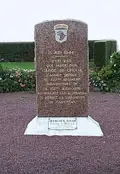
On June 11th right after Bridge No. 4 (last one before entering Carentan) is under control and shortly before noon an unexplained lull occurred in the fighting. The 502d PIR took advantage of this to re-form its left flank positions. Coy C moved forward from Bridge towards a cabbage patch located between the second and third hedgerows where they could fire down along the forward hedgerow as well as along the highway. Company A took positions just behind Company C and extended its line across the road. The positions on the left, in the cabbage patch and along the hedgerows, managed to hold throughout the afternoon against repeated German attempts to come down the ditches beside the highway and along the hedgerows.
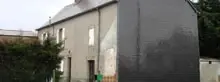
At times they came so near that the men could hear the Germans working their bolts. The enemy gave the two battalions no respite and no opportunity to reorganize or evacuate the wounded. His artillery was weak, but his mortars never stopped firing.
Colonel Cole, looking out from a second-story window in the farmhouse, expected his line to crack. At 1830 he informed Regiment that he planned to withdraw and asked to have covering fire and smoke ready when the time came.
He believed that only closer and heavier artillery support would enable him to hold out. But the radio of his artillery liaison officer, Capt. Julian Rosemond, had been jammed. Finally the situation improves very rapidly, the enemy defence was broken, but the 502 PIR was too exhausted to lead a new assault and stayed on their position. The 506 PIR was sent to archive the job.
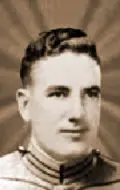
Rank and organization: Lieutenant Colonel, U.S. Army, 101st Airborne Division. Place and date: Near Carentan, France, 11 June 1944. Entered service at: San Antonio, Tex. Birth: Fort Sam Houston, Tex. G.O. No.: 79, 4 October 1944.
For gallantry and intrepidity at the risk of his own life, above and beyond the call of duty on 11 June 1944, in France. Lt. Col. Cole was personally leading his battalion in forcing the last 4 bridges on the road to Carentan when his entire unit was suddenly pinned to the ground by intense and withering enemy rifle, machinegun, mortar, and artillery fire placed upon them from well-prepared and heavily fortified positions within 150 yards of the foremost elements. After the devastating and unceasing enemy fire had for over 1 hour prevented any move and inflicted numerous casualties, Lt. Col. Cole, observing this almost hopeless situation, courageously issued orders to assault the enemy positions with fixed bayonets.
With utter disregard for his own safety and completely ignoring the enemy fire, he rose to his feet in front of his battalion and with drawn pistol shouted to his men to follow him in the assault.Catching up a fallen man's rifle and bayonet, he charged on and led the remnants of his battalion across the bullet-swept open ground and into the enemy position.
His heroic and valiant action in so inspiring his men resulted in the complete establishment of our bridgehead across the Douve River. The cool fearlessness, personal bravery, and outstanding leadership displayed by Lt. Col. Cole reflect great credit upon himself and are worthy of the highest praise in the military service.
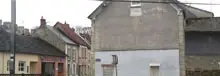
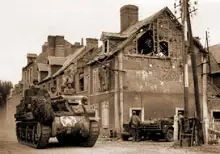
During the night of 11-12 June Carentan was set ablaze by artillery, naval guns, 4.2-inch mortars, and several tank destroyer guns which fired on point targets from the 327th Glider Infantry's positions along the canal.
At 0500, Colonel Sink ordered the 2d Battalion to attack toward Carentan. At dawn, when enemy fire made it apparent that the command post position was isolated and surrounded, the 1st Battalion was ordered to attack south from Hill 30 through the hamlet of la Billonerie toward the command post. As the 1st Battalion started out it was counterattacked near la Billonerie. It took heavy fighting through the hedgerows and houses to break through and extricate Colonel Sink's group. At 0600 it attacked out of the wood at Bassin a Flot and drove rapidly into the center of Carentan. The meeting with the 2d Battalion, 506th Parachute Infantry, occurred about 0730 after a short fight with enemy stragglers around the railroad station. The pincer manoeuvre succeeded in capturing Carentan, but the trap closed too late to catch the bulk of the German defenders, who evidently had escaped south during the night. After fighting in this town on June 12, «Easy Company» took a position on the western flank of the town. Here, Lt. Winters received his first wound - a gunshot wound to his ankle. This is also where Blithe was blind for a few hours.

Carentan Bailey Bridge is the last bridge of this type left and use as a regular bridge, It is a short detour from N13. It is also name Biehou bridge which was constructed by Coy «C» of the 298th Eng Combt Bn at 8.00 pm on July 12th; the work was discontinued at 2330 hours due to artillery fire. They started again on the next morning; finally, it was achieved at 2.00 pm on July 16th.
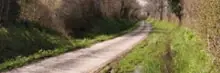
On June 13 the 506th PIR was scheduled to deepen the defensive base South Carentan. Before the attack was settle down and on their way a strong enemy counterattack happened, supported by armour vehicles, struck along both the Carentan-Baupte and Carentan-Périers roads. The German forces were: elements of the 37th and 38th Panzer Grenadier Regiments and the 17th Tank Battalion, all from the 17th SS-Panzer Grenadier (Goetz von Berlichingen) Division, and also remnants of the 6th Parachute Regiment. The attack was obviously directed at the recapture Carentan, and it drove to within 500 yards of the edge of the city. The 2d Battalion, 502d PIR, moved down to the 506th PIR right flank and helped to regain some of the lost ground. But the attack threatened the junction of the V and VII Corps beachheads so seriously that First Army decided to send armour to repel it. Not until this armour arrived was the German threat eliminated and the link between the two corps firmly secured.
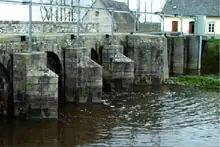
On June 13 the 506th PIR was scheduled to deepen the defensive base South Carentan. Before the attack was settle down and on their way a strong enemy counterattack happened, supported by armour vehicles, struck along both the Carentan-Baupte and Carentan-Périers roads. The German forces were: elements of the 37th and 38th Panzer Grenadier Regiments and the 17th Tank Battalion, all from the 17th SS-Panzer Grenadier (Goetz von Berlichingen) Division, and also remnants of the 6th Parachute Regiment. The attack was obviously directed at the recapture Carentan, and it drove to within 500 yards of the edge of the city. The 2d Battalion, 502d PIR, moved down to the 506th PIR right flank and helped to regain some of the lost ground. But the attack threatened the junction of the V and VII Corps beachheads so seriously that First Army decided to send armour to repel it. Not until this armour arrived was the German threat eliminated and the link between the two corps firmly secured.
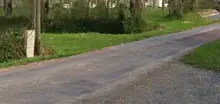
Like Holdy or Hell's corner, today there is nothing to see apart the fields and the cows. This is the spot where Sergt. Leo Gillis took out three Germans manning an MG 42 with his M-1 rifle. Paratroopers Huston, James Luce and Don Shinkoeth were killed there. Luce was the only one who died in the church in Angoville.
Not a lot to see today at Holdy and quite difficult to find on your own. If you wish to go there ask your way to Holdy Military Store at Sainte-Marie-du-Mont. A mixed group of about 70 officers and men mainly from the 506th Rgt and some of the 82nd Division, engaged the German at Holdy corner. The enemy position was organized around a battery of 105 mm guns which no one had expected to encounter in that area. They were in a pretty bad condition, but fortunately an additional force of 75 men from First Battalion sent by Silly, reinforced and supported them under the command of CAPT Knut H. Raudstein of Company C and Capt. Lloyd E. Patch of Headquarters Company. Col. B. Sink also sent another 50 men from the 502nd Rgt to reinforce Holdy corner assault.

South of Sainte-Marie-du-Mont, near Parey Farm, on June 7th, 500 German soldiers of the 1st Bn 6 Inf Rgt were heading towards Carentan to reinforce their forces. They faced Lt. Fred Owens and Pvt Leo Runge who opened fire against the German column, they fired till their MG jammed and continue with an M-1 rifle. The occurred delay permit Col. Howard Johnson Commander of the 501st PIR who landed in front of Château le Bel Enault, to group a sufficient number of men, fully equipped with MGs and mortars to seriously attack the enemy. The German troop was decimated: 150 KIA and 350 captured some 25 escaped the carnage, the Americans lost some 10 KIA and 33 WIA.