Major-General Gale was informed by Lt. Gen. F. Browning on February 17th 1944, that his men would have to capture the bridges over the River Orne and Caen Canal. Gale recommended use of the 3rd Bgde.
The job was divided in four operations.
711th Division of the German 15th Army was based at the east of River Orne with about thirteen thousand men.
716th Division of the German 7th Army was based at the west of River Orne mixed with osttruppen (eastern national conscripts).
The primary objective was to capture Ranville and Bénouville bridges known today as «Pegasus Bridge» and «Horsa Bridge». The nearest DZ was north of Ranville. During the battle, pathfinders of the 22nd Independent Parachute Coy would marke DZ's «K», «N» and «V» with their «Eureka» beacons. The 5th Parachute Bgde was to land on DZ «N» to setup a defensive screen in front of the bridges. The 7th Bn were to secure Bénouville and Le Port, whilst the 12th and 13th Bn takes over Ranville and south ridge.
The 3rd Parachute Bgde including 1st Canadian Bn was to be dropped on DZ's «K» and «V», 5 miles east of Ranville. Canadian add also to cover engineers of the 3rd Bgde when they demolished River Divette and Dives bridges at Varaville and Robehomme. The 8th Bn were to land on DZ «K» 4 miles south of Ranville and also protect the engineers in charge of destructing the bridges of Troarn and a little further at Bures. As soon that task was achieved, they will reinforce the ridge stretched from Bois de Bavent 4 miles south-east of Ranville and to Le Plein and Le Mesnil 2 miles north and east of Ranville.
A few hours later the gliders transporting Divisional HQ and heavy equipment were to land on LZ «N» formerly DZ «N».
Operation TONGA was achieved.
There are two Châteaux at Ranville:
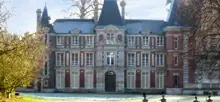
Château Rohan-Chabeau located General Leclerc Street. This one is the largest one, it was the first house liberated in France, and not Café Gondrée as most of the people think. It had to be use as Command post by the 5th Brigade, and then was the first objective of the 13th Bn's men. They arrived only few minutes after their drop and took the position a little before 2.00 am. Café Gondrée was liberated by the 7th Bn's men at 5.00 am.
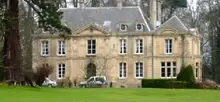
Château du Hom, property of Suzanne Doix, eyewitness at the time, remember seen thousand of paratroopers falling all over the place. The house was used at 3.30 am as General Gale's Command post, he was commanding 8 000 men. During three weeks the château was the Head Quarter of the 6th British Airborne.

La Tuilerie
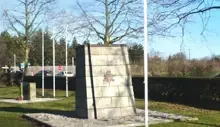
6th ABN Monument
At Le Mesnil, the Canadians had quite a day too. First and second Bn of the 858th Gren. Regt. reinforced with the 2nd Bn of the 857th and several coy of the 744th Gren. Regt, all supported by several tanks and armored vehicle tried to squeeze in between the Canadian and the 9th Bn.
This attack was stop first by HMS Arethusa directed by Capt. Greenway and the crossed machine gun fire of the British and Canadian positions.
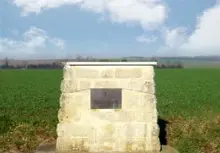
Germans gunned British south flank at Le Bas de Ranville to Herouvillette, first attack was made against the 2nd Oxfordshire and Bucks Light Infantry by the 192nd Pz Gren. Regt, who managed to get within 100 yard of Coy C and coy D before they could stop the attack. Finally at 09.30 pm enemy forces withdrew leaving their dead men and 12 wrecked amored vehicles.
At Le Bac Ranville, the 12th Devonshire had suffered the worst of the artillery fire, the attack began at 08.00 pm, about 30 minutes later 3 coy of the 125th Pz Gren. Regt. Supported by tanks engaged Coy A from 300 yards away. British resisted.
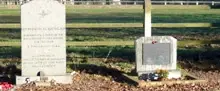
8th ABN Battalion Monument
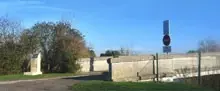
Juckes Bridge
At 03.30 am, the 8th Bn consisted of 140 men commanded by Lt. Col. Pearson could wait no longer and marched with his men into the Bois de Bavent woodland, from where they would proceed to destroy the bridges. To cover his rear he left an ambush of five men and two PIAT's behind to attack any enemy vehicles moving eastwards along the road. Several hours later, a group of vehicles of the 21st Panzer Division approached these men and hastily withdrew after six of their vehicles were subsequently destroyed.
Moving into the woodland, Pearson set up his Headquarters at a crossroads in the Bois de Bavent, thereafter he sent Captain Juckes and his No. 2 Troop, of the 3rd Parachute Squadron, on to Bures to destroy the two bridges. This was achieved by 09:15. Pearson did not know it, but Major Roseveare, the commander of the Squadron, had himself destroyed the bridge at Troarn shortly before dawn. When Juckes returned from Bures, Pearson sent him off to Troarn with 8th Battalion's No. 9 Platoon to deal with this same bridge. The group, having cut their way through several skirmishes most successfully, accounting for a number of enemy dead and prisoners in the process, set about increasing the damage to the bridge before returning to the woods.
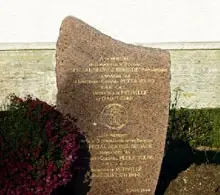
Coy C of the 1st Canadian parachutist Bn, lead byMajor Murray Mac Leod, received friendly fire bombing from the RAF south of Merville. Fortunately without casualties.
Around 01.00 am, they reach their objective: Varaville, where they had to destroy a bridge.
In Varaville Château they confront a small German garrison, and the bridge is not blown up until the next day. The parachutists withdraw to the west.
During more than two months Varaville and Petitville are in the no man's land, until 17 August when General Montgomery launches Operation Paddle. No. 3 Commando under lieutenant colonel Young liberates Petitville and Varaville, but the Germans had evacuated the population mid-July.
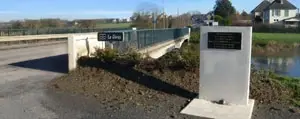
The raid of Major Roseveare into German lines.
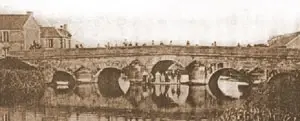
5-span masonry arch bridge 110ft long.
On June 6th the 8th Parachute Bn dropped east of River Orne at around 04.00 am.
Gathering near Troarn; Major TimRoseveare RE embarks with Lt. David Breesen RE and 7 sapers into a jeep and its trailer.
The team crosses the town under German fire which, by miracle, does not hit the explosives packed into the trailer.
Reaching the bridge in Troarn, the paras blow it up quickly and withdraw toward Le Mesnil. The front line stabilises until 18 July when the Allied forces launch offensive «Goodwood» east of Caen, but Troarn is not taken.
It is only on 17 August that the 41th Royal Marine Commando enters in Troarn, evacuated by the retreating Germans.
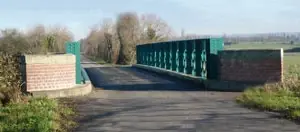
B Coy of the 1st Canadian Parachute Bn was to jump with the main body of the attack as well.
Their main task was to escort and protect engineer elements tasked to blow the bridges in Robehomme and then occupy road and track junctions.
They were to hold until the destruction of the Robehomme Bridge could be achieved, at which point they were to make their way back to the Battalion position at Le Mesnil.
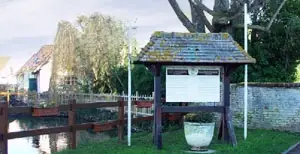
2 miles east of Le Mesnil, the village was occupied by German troops, so the 1st Canadian Parachute BN sent several probing patrols, the operation turning close to a disaster , when a German machine gunner acting with surprise, opened fire.
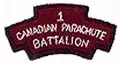
The Canadians made as much noise as they could. Fortunately not a single man was lost. Once away from the village, Lt. McGowan ordered 3 men to break cover and draw fire to reveal their positions.
During the night the 1st Bn sent 12 men under the protection of 14 sappers to set explosive charges in houses and heavy mortar position. The first unit to be pulled out of the line was the 3rd Parachute Bgde., whose numbers were by far the weakest, having suffered the worst of the attaks during the previous days.
On the June 16th their positions, stretch from Bois de Bavent to Le Mesnil, were taken over by the 5th Parachute Bgde. Nearby north of Le Mesnil to Bréville was the 6th Airlanding Bgde. The first Special Service Bgde still held the ground west of Bréville next to Le Plein, Amfreville and Hauger Hamlet, to the west were Commandos 4th SS.
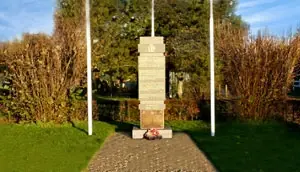
6th Airborne Monument
C Coy (Major HM Macleod) was to secure the DZ, destroy the enemy headquarters (HQ), secure the SE corner of the DZ, destroy the radio station at Varaville, and blow the bridge over the Divette stream in Varaville. C Coy would then join the battalion at the Le Mesnil cross roads.
A Coy (Major D Wilkins) would protect the left flank of 9th Battalion during their attack on the Merville Battery and then cover 9th Battalion's advance to the Leplein feature. They would seize and hold the Le Mesnil cross roads.

B Coy (Major C Fuller) was to destroy the bridge over the River Dives within two hours of landing and deny the area to the enemy until ordered to withdraw to Le Mesnil cross roads.
It should be noted that each paratrooper carried almost 50% more than the acceptable load tables for the invasion aircraft. Most of this additional load was extra ammunition. 1 Can Para assembled and boarded their aircraft in the evening hours of 5 June 1944. C Company departed at 2230 hours as part of the Pathfinder Group for the British 6th Airborne Division main force. The D-Day invasion had begun. The battle for the DZ and surrounding areas was tough and sometimes quite intense, but it was later determined that the German Army did not recognize that paratroops had been utilized until it was to late.
By mid-day, 06 June 1944, 1 Canadian Parachute Battalion had completed all tasks and seized their objectives. From this time until 06 September 1944, the Battalion was employed as an infantry unit on defensive and offensive operations. On the 6th September 1944, the Battalion returned to England (Carter Barracks) to rest, reorganize, be brought up to strength, and prepare for their next mission.
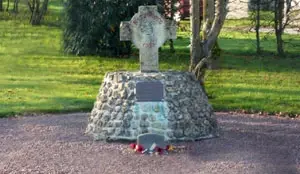
At Le Plein, No. 6 Commando was heavily mortared shortly after 08.00 am, but fortunately to not great loss.
After the fire lifted, German units of the 857th and 858th Gren. Regt. Attacked into the Commando positions where they had shown shelling on the moving Commando positions, German attack were then re-directed at 4 Commando in Hauger. Shelling began at 10.00 am and continued until 05.00 pm when the Germans attack.
The Commandos held firm to retreat all positions and then contain.
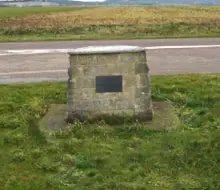
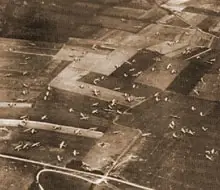
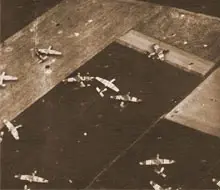
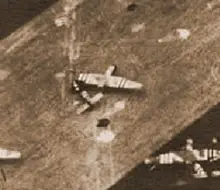
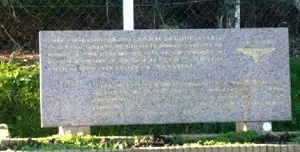
In the night of 5-6 June 1944, the 9th Battalion under Lieutenant-colonel Otway was assigned the task to capture the battery of Merville.
The operation was carefully prepared. Before the parachutists attack there was a preliminary air bombing of the target by the RAF. But the RAF missed the battery and bombs were dropped on Gonneville-sur-Merville, southwards.
The 1st Canadian Parachute Battalion crossed the town, cleared of enemy, and moved towards its objective. Gonneville-sur-Merville stayed in German lines until 17 August with the Operation Paddle. The armoured vehicles of the Belgian Brigade Piron progressed with difficulty, because the ground was churned up by explosions, until they reached Gonneville Château.
The 12th Battalion Devonshire Regiment overflew a German strongpoint at the Calvary in Gonneville. In the afternoon, the Ox and Bucks Battalion of the 6th Airlanding Brigade entered Gonneville-sur-Merville. The town was a pile of rubble and had been evacuated by the Germans.
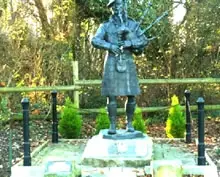
On June 9th, German infantry regrouped about 500 men to move towards Bréville, which is located about 3 miles north east of Ranville and between Le Mesnil and Amfreville. They take the 3rd Parachute and 1st Special Service Bgde positions. On June 10th repeated German attacks against Bréville were made to reach the bridges across the River Orne and Caen Canal. Their movement was stopped by the 9th Bn at the Bois du Mont.
By 11.00 am the German had failed in their attempt and some 50 soldiers dig in 500 yards away, but under the Bren and Vickers firing they were cut to pieces, Coy A let a German patrol approach to within just 10 yards before they opened fire on them.
On June 11th the 5th Black Watch arrived in the vicinity of the 9th Bn, Their Coy D relieved Coy C at Château Saint-Côme-du-Mont. All the mortars of the 9th Bn and the 5th Black Watch joined by the guns of the 51st Highland Division, pounded Bréville. When the artillery barrage ended and troops start to move in, they were stopped by machine gun fire and mortars fire, The Black Watch pulled back to Château Saint-Côme-du-Mont but lost approximately 300 men.
The battle of Bréville was won on June 12th at a heavy cost: 77 Germans KIA, 162 British KIA, but the 6th Airborne left flank was secured.