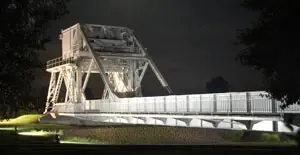

The task of capturing the bridges over both the Orne River and Canal fell to a selected force drawn from the 2d Battalion, Oxfordshire and Buckinghamshire Light Infantry, and the Royal Engineers, commanded by Major John Howard. The six gliders carrying this force were to land in the dark on the approaches to the bridges. In what was one of the great navigational feats of D-Day morning, three of the gliders crash-landed (the most explicit term describing a glider's reunion with the earth) within forty seven yards of the east end of the canal bridge. A lone German sentry who might have sounded the alarm did not do so because he assumed that an airplane had crashed nearby. His mistake was costly. While one of Howard's squads crossed the bridge in a rush, taking a single casualty, Lt. Den Brotheridge, the first British officer KIA. Others overran nearby pillboxes and trenches before the surprised Germans could reach their positions. Within 20 minutes, the bridge and its defences were in British hands.
The assault on the Orne River bridge went as smoothly, although one of the three gliders assigned to that operation missed the bridge area altogether, landing miles away in the flooded Dives valley. Only one of the remaining two gliders landed near the bridge. The twenty-odd men from that lone glider rushed the bridge despite the loss of surprise. Fortunately, the German guards did not know the odds; they scattered before the determined British charge.
Not only had the bridges been captured easily, but they were intact. Both structures had been wired for demolition, but the explosive charges had not been planted. Major Howard's men held their prizes throughout D-Day while German pressure mounted. Around 1200 hours, some two and a half minutes after they were to have been reinforced, the beleaguered defenders were startled by the distant sound of bagpipes. The 6 Commando of the 1st Special Service Brigade, led by Brigadier Lord Lovat, had arrived with piper Bill Millin. The two forces joined ranks to the tune of «Blue Bonnets over the Border» and the crack of small-arms fire. Although both bridges would not be truly secure until units of the 3d British Division arrived late in the afternoon, the skirl of Millin's pipes had assured the men of Howard's command that the seaborne invasion was ashore.
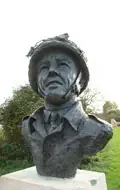
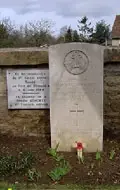
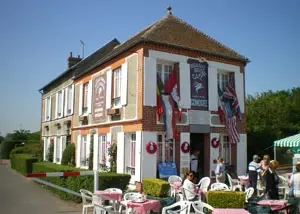
Lt. Den Brotheridge, British Airborne Forces, was killed by a friendly shot on D-Day, capturing Pegasus Bridge. He lies in the civil cemetery of Ranville church. Note the tribute from the owners of Cafe Gondree the first home in France to be liberated on D-Day.
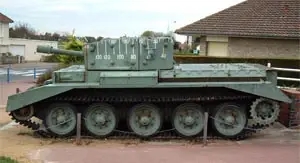
A Centaur version of the British Cruiser Mark VIII tank mounting a 95-mm gun. This tank belonged to the 5th Independent Battery, Royal Marine Armoured Support Regiment, which landed at La Brèche d'Hermanville. Three such regiments were organized a few months before D-Day to provide additional fire support to the first waves of infantry. This Centaur IV was recovered in 1975.
A British Commonwealth cemetery at Ranville is a mile and half from the Pegasus Bridge. 2,563 British Commonwealth soldiers are buried there, including Lieutenant Den Brotheridge, who was killed in the attack on the bridge. The round-about in front of the cemetery is named the Place General Sir Richard Gale, after the commander of the 6th British Airborne Division. A plaque directly opposite the cemetery commemorates the events of D Day in Ranville.
Three memorials in Amfreville commemorating the 4 and 6 commandos and the 1st Special Service Brigade of which they were a part.
A plaque marking a stop on the Pegasus Trail Battlefield Tour. These markers follow the route of the 6th Airborne Division.
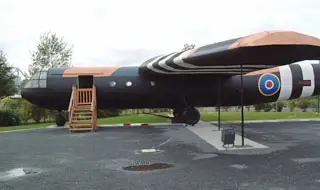
Pegasus Bridge as a site is especially rich in D-Day memorabilia. In addition to the original bridge itself (complete with painted-over bullet marks and a mortar impact in the bridge counterweight), the following monuments, memorials, and artefacts are found nearby:
On D-Day, Canada landed 14,000 troops of the 3rd Canadian Infantry Division on Juno Beach. D-Day for Canada also involved the Royal Canadian Air Force which bombed and attacked key enemy targets, while the Royal Canadian Navy contributed 109 vessels and 10,000 sailors to the massive armada of 7,000 Allied vessels. On D-Day, Canada's assault troops landed on Juno Beach and stormed ashore in the face of fierce opposition from German strongholds and mined beach obstacles. The soldiers raced across the wide-open beaches swept with machine gun fire, and stormed the gun positions. In fierce hand-to-hand fighting, they fought their way into the towns of Bernières, Courseulles and Saint-Aubin and then advanced inland, securing a critical bridgehead for the allied invasion. The victory was a turning point in World War II and led to the liberation of Europe and the defeat of Nazi Germany.
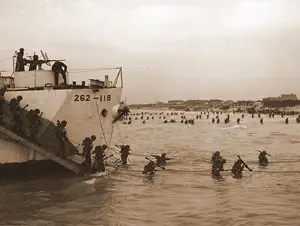
Fourteen thousand young Canadians stormed Juno Beach on D-Day. Their courage, determination and self-sacrifice were the immediate reasons for the success in those critical hours. The fighting they endured was fierce and frightening. The price they paid was high - the battles for the beachhead cost 340 Canadian lives and another 574 wounded.
Juno beach was five miles wide and stretched on either side of the small fishing port of Courseulles-sur-Mer, France. Two smaller villages, Bernières and Saint-Aubin, lay to the east of Courseulles. The coastline had been fortified by the occupying Germans and bristled with guns, concrete emplacements, pillboxes, fields of barbed wire and mines.
The 3rd Canadian Infantry Division reinforced by the 2nd Canadian Armoured Brigade landed in two brigade groups:
Each Brigade group was comprised of 3 infantry battalions (regiments), and supported by an armored regiment, 2 artillery field regiments, combat engineer companies and extra units such as Armored Vehicles, Royal Engineers (AVRE's). The Fort Garry Horse tanks (10th Armored Regiment) supported the 7th brigade landing on the left and the1st Hussars tanks (6th Armored Regiment) supported the landing on the right.
The 9th Brigade consisting of the Highland Light Infantry, Stormont Dundas and Glengarry Highlanders, and North Nova Scotia Highlanders regiments landed from 11.33 to 11.50 in 17 minutes and advanced through the lead brigades. The Sherbrooke Fusiliers tanks (27th Armored Regiment) provided tank support.
Although a total of 14,000 Canadians stormed Juno Beach on D-Day, there were not more than three thousand young Canadians in the first wave - all ranks. The initial assault was the responsibility of four regiments with two additional companies supporting the flanks:
The first wave of Canadian infantry was brought into shore by LCA's landing at 7:55. When the ramps lowered the troops disembarked and waded ashore. The soldiers hit the beaches and began the deadliest run of their lives. As they worked their way through the obstacles and minefields they came into the killing zones of the German gun positions. The assault troops raced across the beaches through the curtain of machine gun fire, rushed the pillboxes and eliminated the German strong-points with Sten-guns, small arms fire and grenades. The first wave took heavy casualties on the beaches. DD tanks arrived on the beaches and fired on the pillboxes, decimating the remaining strong-points. In bitter hand-to-hand fighting the Canadians cleared the enemy gun positions and fought their way into the towns.
All morning long the battle raged along the precious strip of coast. The Regina Rifles and Royal Winnipeg Rifles fought their way through Courseulles and Graye-sur-Mer. The North Shore Regiment captured Saint-Aubin while the Queen's Own Rifles took the town of Bernières. Tanks and infantry struck inland all that day and pressed on through villages, fields and groves of trees defended by determined Germans.
Facing formidable gun emplacements, machine gun nests and snipers, the brave Canadian soldiers did not hesitate in their advance. Determined officers led their well trained platoons to take out the enemy strongholds. Countless times the soldiers showed acts of valor by engaging the enemy in vicious close quarter fighting. Soldiers lost their close friends in the fighting and somehow found the courage to keep going. Through the terror of the battle the disciplined soldiers pushed on to overcome the enemy positions. The fierce battles were won by the bravery of the individual Canadian soldiers and the collective actions of their regimental units.
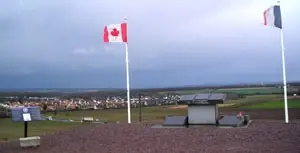
Next to Bourgeubus Ridge, Verrières Ridge was another dominating feature of which German possession ensured the British and Canadians in Normandy would be pinned against the sea.
On 25 July, 5th Brigade assaults on this feature proved costly for the Calgary Highlanders, and especially for the Black Watch who lost over 300 men in the course of a few hours, making their attack the costliest single day of battle for a single Bn, not counting Dieppe.
Note that a great number of soldiers of Black Watch Bn were Americans volunteers wearing Canadian uniforms.
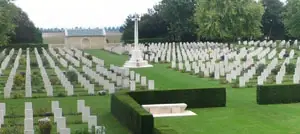
2 049 soldiers were buried in this cemetery: 2 044 Canadians, 4 British and 1 French.
This site gathers graves of two temporary cemeteries established in 1944 in Bény-sur-Mer and Reviers.
Two maple lines lead from the centre to the remembrance stone. In the building on the left, at the entrance, a plaque is dedicated to The Cameron Highlanders of Ottawa Regiment, to the men who fell during D-day and the campaign in Europe.

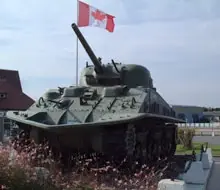
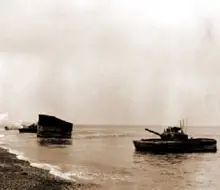
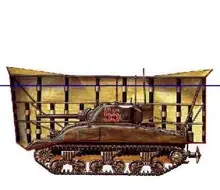
This Sherman, belonging to the 1st Canadian Hussars, is one of the five (out of nineteen) that sank on the run in. It was recovered in 1971. Note the lip extending around the entire hull to which the canvas dam was attached. The DD's making it ashore provided vital fire support for Company A of the Regina Rifles, which encountered heavy fire both from German resistance nests in the harbor area and from artillery positioned further inland.
Flanking the beach exit is a memorial plaque to the officers and men of the Regina Rifles who were casualties during the war. Nearby are plaques commemorating the 1st Canadian Scottish Regiment. Across you still have a 50 mm German anti tank gun.
Some three hundred yards east along the Avenue de La Combattante is a memorial to the Royal Winnipeg Rifles. Next stop will be Bernières-sur-Mer.
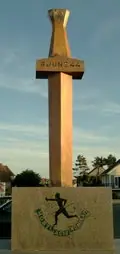
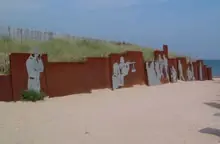
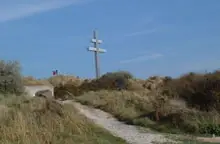
Here, Prime Minister Churchill, with Generals Jan Christian Smuts and Alan Brooke, landed on 12 June for a tour of the beachhead. Four days later, George VI also came ashore here. A monument commemorates these events, as well as the assault landing.
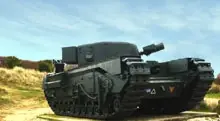
The tank is a Churchill AVRE, which laid buried in the sand until its recovery in 1976. Keep driving along the street, then park your car close to the Lorraine Cross, erected there to commemorate the landing spot of Gen. de Gaulle, who was on board La Combattante. Walk down the beach, through the breach, along side Cosy's Bunker, on the west side of the Seulles River which contained a 75 mm field gun and a very large anti-tank gun. A story of unimaginable courage took place near this pillbox. It concerned Corporal «Bull» Klos. Royal Winnipeg Rifles history: «Rushing the enemy, «B» Company encountered heavy enemy fire. Corporal Klos, badly shot in the stomach and legs while leaving the assault boat, made his way forward to an enemy machine-gun nest. He managed to kill two Nazis before he was mortally felled. His hands still gripped about the throat of his victim produced a chilling sight!».
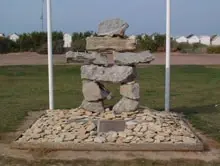
Park near the Inuksuk, right after the tourist office.
You are now facing the Nan White sector of Juno Beach, where the Queen's Own Rifles and La Chaudière regiment landed. The QOR was to land behind DD tanks, but the high seas breaking over the offshore reef meant that the tanks had to be brought into the beach well behind the infantry.
As it was, the LCA's carrying the assault companies of the QOR were a half-hour late reaching the beach and some two hundred yards east of their designated landing area.
The boats dropped their ramps among the beach obstacles. As many as one-fourth were damaged or sunk upon landing or when attempting to withdraw through the obstacle belt.
One company of the QOR took sixty-five casualties crossing the hundred yards of sand to the sea wall. Nevertheless, supported by fire from a flak ship just off the beach, the Canadians quickly overran the German resistance nests. When the Regiment de la Chaudière landed fifteen minutes later, much of the earlier fire had been suppressed.
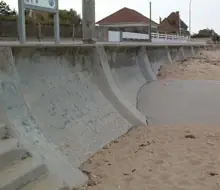
Walk to the promenade to La Cassine Villa site's where Memorials are, from there walk along the seawall link by the anti-tank wall. 300 yards further, on your left hand side, is the famous house which cost 100 lives to the QOR.
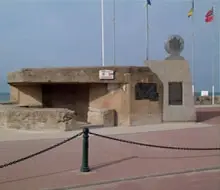
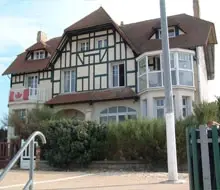

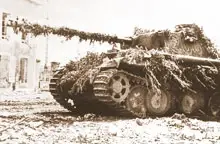
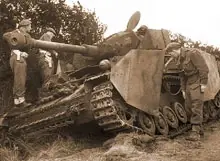
As the Allies prepared for their invasion of France in early June 1944, members of 12th SS Panzer (Hitlerjugend) Divison were deployed near Caen.
The impressionable young minds of the Hitler Youth had been subjected to a powerful regime of training that had sought to overcome their immaturity, exploit their idealism and youthful enthusiasm, and politically indoctrinate them in Nazi ideology.
The entire division, except for officers and NCOs, consisted entirely of boys aged 17 and 18. They were led and taught by veterans of the 1st SS Panzer Divison (Leibenstandarte) of the Eastern Front - all die-hard Nazis embittered by the vicious fighting in the east. For four weeks prior to D-Day the 12th SS Division, at full strength with between 20,000 and 21,000 all ranks and 214 tanks, was busy preparing for an anticipated Allied attack. Among the senior officers present was SS Colonel Kurt Meyer.
Kurt Meyer was a battle-hardened, fanatical Nazi. A devout supporter of Hitler, he had joined Hitler's Bodyguard (Leibstandarte) in 1933 and all his subsequent service was with the SS. He had fought in Poland, France and Holland with the Adolf Hitler Division, and as regimental commander had played a key role in the Greek campaign. The intensity and brutality of the fighting on the Eastern Front needs no introduction and Meyer had helped to spearhead the German drive into Russia. Here he had displayed feats of fearlessness that would later mark his exploits in Normandy.
During his three years in Russia he had plunged deep into the Caucasus, and during his retreat was completely encircled by his opponent three times, on each occasion fighting his way out with only a handful of survivors. Meyer was not only willing, but apparently sought out ways of putting his life in peril by dashing into danger areas on his motorcycle; the multiple wounds he sustained during the war were ample proof of this.
While Meyer had proven to be a great tactician, he was also accused of unpalatable behaviour, such as burning villages and murdering women, children, and Soviet soldiers during the brutal fighting around Kharkov in 1943. He had been assigned to the 12th SS Panzer Division in the spring of 1943 and was Commander of the 25th SS Panzer Grenadier Regiment in early June 1944. He would take over as divisional commander on 13 June, following the death of Brigadefuehrer Witt.
The Canadians first came into contact with the 12th SS in the days following the Normandy landings. On D-Day+1, SS Lieutenant Colonel Karl-Heinz Milius threw his 3rd battalion at the Canadians during the battle for Authie.
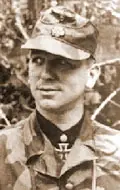
The North Nova Scotia Regiment and Cameron Highlanders thwarted this German counterattack, stopping the grenadiers in their tracks and bloodying the 12th SS Panzer division for the first time. The twenty-three Canadians captured by the Germans in Authie suffered a horrific fate that foreshadowed future atrocities at the hands of the SS troops. At the main intersection (at the southern end of the village) Canadian soldiers were disarmed, told to remove their helmets, and shot at close range. The young German troops further insulted the Canadian lives they had taken. In one incident, some German soldiers propped up the corpse of a murdered Canadian, placed an old hat on his head, and stuffed a cigarette box into his mouth. In another situation, eight of the lifeless Canadian bodies were unceremoniously dragged onto the street where they were repeatly mutilated by passing tanks, trucks and armoured vehicles. Appalled French onlookers later testified that SS troops whooped like drunken pirates at their handiwork.
Other Canadians were captured and taken to the Abbaye d'Ardenne, the headquarters of the German division where Meyer had watched the battle unfold. In the abbey garden eleven Canadians were interrogated and then killed on 7 June, each Canadian prisoner shaking hands with his comrades before being executed. At noon the next day seven more Canadians were shot at the Abbaye; their murders coincided with the execution of Canadian POWs on the Caen-Fountenay Road. The following evening Canadian prisoners were taken to the 12th SS's 2nd Battalion headquarters to meet their death. On the now tranquil grounds of the Château d'Audrieu, Canadian POWs were interrogated and duly executed, first in threes and later in more efficient larger numbers. These large-scale incidents represent 120 of 156 murders committed by the Hitlerjugend during the first ten days of the Normandy Campaign. Other murders took place on a smaller scale at locations like Bretteville-l'Orgueilleuse, Norrey and Le Mesnil-Patry. News of the murders began to filter back to the Canadian ranks in Normandy, but there was little immediate proof of the atrocities.
In response to reports of atrocities from escaped Allied prisoners of war and liberated French civilians, the Allied headquarters staff formed organizations to look into allegations of criminal activity beginning in the summer of 1944. Field Marshall Bernard Montgomery ordered two courts of inquiry while the Allied Supreme Commander, General Dwight D. Eisenhower, established a Standing Court of Inquiry under the Supreme Headquarters Allied Expeditionary Force (SHAEF) which began its work in August 1944. Investigations into murders yielded disturbing information.
There was evidence of one hundred and fifty Americans who had been captured and murdered near Malmedy by 1st Panzer Division. Furthermore, the Allies began to realize the magnitude of the crimes committed by the 12th SS against Canadians. Between September 1944 and May 1945, for example, the bodies of the men killed at the Abbaye d'Ardenne were found in five shallow, unmarked graves.
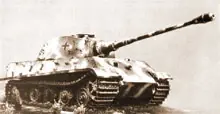
At the end of the war, Canadian War Crimes Investigation Units (CWCIUs) were established to investigate alleged incidents of war crimes in Europe and the Far East. Number 1 CWCIU was led by Lieutenant-Colonel B.J.S. (Bruce) Macdonald, a lawyer and former Commanding Officer of the Essex Scottish Regiment. Macdonald had already participated in the SHAEF Court of Inquiry in which he had interviewed hundreds of German prisoners in North American POW camps and gathered information of alleged atrocities committed by Meyer's 25th Panzier Grenadier Regiment. Warrants were issued for the arrest of Kurt Meyer. «Panzermeyer» was before the Courts by December 1945. Meyer had been captured by the Americans in September 1944, but had concealed his identity for over a month by wearing a Wehrmacht uniform. Once identified as an SS officer, he was transferred to England for questioning and held there at a POW camp. Under the authority of War Times Regulations (Canada) P.C. 5831, a Canadian Military Court was established at Aurich, Germany. It was here that Meyer was to be sent to stand trial, under the Convening Authority of Major-General Chris Vokes, the General Officer Commanding (GOC) 3rd Canadian Infantry Division of the Canadian Army Occupation Force.
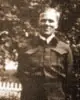
Soldat James Alvin Moss.
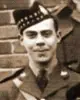
Lieutenant Freddie Williams.
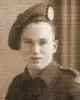
Soldat Walter George Doherty.
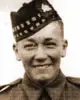
Caporal George Pollard.
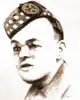
Soldat Hugh Aller MacDonald.
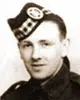
Soldat Hollis Leslie McKeil.
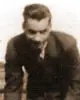
Soldat Reginald Keeping.
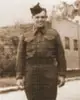
Soldat Georges Edward Millard.
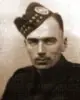
Soldat Ivan Lee Crowe.
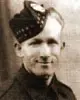
Soldat George Richard McNaughton.
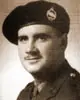
Lieutenant Thomas Alfred Lee Windsor.
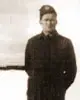
Soldat Harold George Philip.
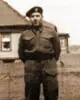
Soldat George Vicent Gill.
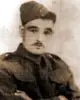
Soldat Charles Doucette.
Caporal Fah MacIntyre.
Soldat Roger Lockhead.
H-Hour was 6.30 am on June 6th 1944. The landing window had to consider the availabilities of landing craft, Navy and air support. Plus the combination of daylight, tide and moonlight. Low tide was at 05.30 am, sunrise was at 05.58 am. The D-Day planners decided to land at 06.30 for several reasons: LCA's could come closer to the bluff, minimizing the uncovered distance for the GIs, and all the obstacles would be exposed. The sunrise hour permitted the Navy and the Air Force to optimize their shelling and Bombardment.
Two Infantry Divisions landed on D-Day, each strong of 14men, 1st and 29th ID, attached were two Tank Bn (741st and 743rd) with 45 tanks each, two Engineers Special Brigades (5th and 6th) strong of 4.188 men each, 5th Ranger Bn strong of 550 men and half of 2nd Ranger Bn strong of 225 men.
The fist wave was composed of Infantry, Armor and Combat Engineers who had to face the enemy fire, 1,450 men were schedule to land at 06.30 am.
Each Coy contained 3 platoons (41 men) and a platoon of heavy weapons: 60m/m mortars and M 1919 Browning machine gun (36 men) and a HQ (6 men) which gives a total of 165 per Coy.
There were 4 Coy per Bn:
Coys D, H, M were the heavy weapons of each Bn. The heavy weapon Coy had longer range mortars such as 81 m/m, longer range calibre. Rich from Sicily experience the 16th Regiment split their heavy weapons coys in the other ones to reduce the number of men losses but didn't share that knowledge with the 116th Regiment who no combat experience. LCVP and LCA carried 31 men and one officer; there were 6 landing craft per Coy. The Coy HQ was the seventh one and would land with the second wave.
Each craft had men for infantry support, engineer task, as cutting the wire, de-mining and clearing the bunkers as well M-1 rifle, bazookas, flamthrowers, explosive loads, BAR and 60 m/m motars.
741st and 743rd tanks Bn had 90 tanks, each Bn had 32 DD (amphibious tanks), which were to be launched 6,000 yards off shore. On 32 tanks of the 741st Bn, 27 were sunk right away, 2 made the beach and the 3 last one landed from LCT's. In front of such a disaster the 743rd Bn decided to transport their tanks to shore. 743rd Bn reinforce 116th Regiment from Les Moulins to Le Ruquet (Easy Green) and to Vierville (Dog Green).
5th and 6th Special Engineer Brigade job was to clear the beach from obstacles: anti-personal and anti-vehicle mines, barber wire and opening the different exits.
5th SEB was composed of 37th, 336th and 348th Engineer Combat Bn and 6th Naval Beach Bn.
6th SEB was composed of 147th, 149th and 203rd Engineer Combat Bn and 7th Naval Beach Bn.
Engineer Combat Bn (634 men) was the base of beach Bn, it was added transportation assets, quartermaster units, ordnance ammunition Company, motor repair platoon, medical Coy, MP chemical decontamination, signal platoon and two surgical teams, A Combat Engineer Bn would support one Infantry Regiment. The SEB were organize in 16 assault teams, five of them reach the beach first, the sea current was the major problem; another 8 were delayed.
16 Bulldozers were to land with the first wave, only 6 did and 3 were immediately destroyed by enemy artillery. In despite of all the troubles they finally open 6 gaps totally and partially open another 3.
DD Tanks, were to be launched from off shore at 6,000 yards. These were scheduled to land before infantry that would arrive by craft at the end of low tide. Craft would drop their ramp down and troops would rush out and fighting their way inland. Tanks task was to support the infantry and silence the enemy fortifications. The SEB who were to land 3 minutes after the infantry would place explosive charges on the beach obstacles then clear the beach while the infantry was clearing the bluff. They would penetrate the enemy line all to Treviéres, final target on D-Day.
In military times are discussed from the moment an operation begins thus: D-Day for the invasion of France in 1944 was June 6th. H-Hour is the beginning hour and minute of an operation. For the 29th, 1st and 4th Infantry Divisions H-Hour was 06.30 am, for the paratroopers 82nd and 101st H-Hour was 01.30 am on D-Day June 6th 1944.
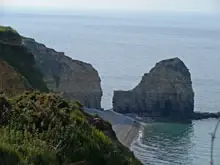
To reach the Pointe du Hoc Ranger Monument, now maintained by the American Battle Monuments Commission, follow the direction signs west along D 514 to the car park outside the monument (6 m).
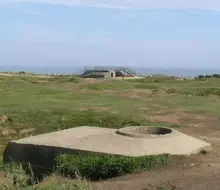
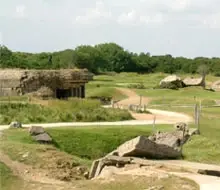
The Pointe du Hoc today retains much of its battlefield character because of the destruction left by the rain of bombs and shells the Allies unleashed to neutralize this rocky point. The much feared battery was bombed three times before D-Day, then hit from the air again that morning. 600 tones of bombs were dropped. The battleships Texas and Arkansas battered the area with their 14- and 12-inch guns just after dawn. The destroyer Satterlee saturated the position with her 5-inch guns in direct support of the Rangers.

Col. James Earle Rudder.
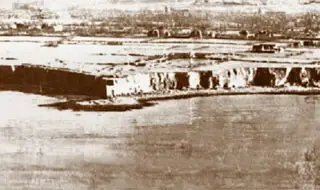
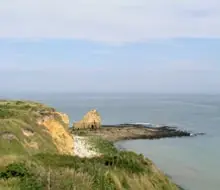
This concentration of fire left craters and ruined casemates which over sixty years have yet to erase. From the barbed-wire fence along the cliff top, you can look down the hundred-foot cliff to the east beach where three companies of the 2d Ranger Battalion, commanded by Lieutenant Colonel James E. Rudder, landed on D Day. Their mission was to scale the cliff, then silence the six 155-mm GPF thought to threaten the landing operations on both American beaches.
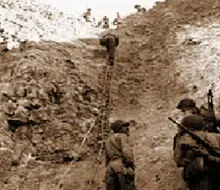
The Rangers came in forty minutes late in ten LCA's, trailed by four DUKW's and two supply boats. They lost one of each boat type on the run in. The LCA's were equipped with rocket-propelled grappling hooks which were fired as the boats grounded under the cliff. Despite small-arms fire, improvised mines, and grenades lobbed from above, the Rangers used their rope and aluminum ladders to scale the cliff within five minutes of landing. Ironically, they found the casemates empty of guns, which days before had been displaced further inland. Later that morning, a patrol found the 155s unguarded and spiked them. Colonel Rudder then set up a defensive perimeter and waited for reinforcements. «Located Pointe du Hoc», he managed to signal V Corps that afternoon, «mission accomplished need ammunition and reinforcement many casualties». Those reinforcements were to have come from Rangers of the 2d and 5th battalions waiting offshore.
Because Rudder's assault was late, the Rangers went to their next mission and landed on Omaha Beach. It took them two days to fight their way overland to Rudder's relief.
By then, his force had been reduced to about ninety effectives. Rudder received the Distinguished Service Cross for continuing to lead his men, although twice wounded. The monument, standing on a German blockhouse which you cannot enter, consists of a rough granite obelisk flanked by tablets inscribed in French and English.
«Rangers lead the way»

The cemetery lies south of N 13. This site, originally an American cemetery, was given to the German government in 1948 after the American dead had been removed to the American cemetery overlooking Omaha Beach. La Cambe now contains over 21,222 German dead.
La Cambe stands in somber contrast to the American, British, and Canadian cemeteries in Normandy, with their open, garden and park-like appearances. I recommend that you spend sometime visiting this cemetery and its Visitors Centre.
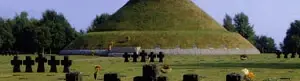
«Darkly rises the mound
Over the graves of the soldiers
Darkly stands God's Command
Over the dead of the War.
Yet brightly glows the sky
Above the towering crosses
More brightly still shines their comfort:
The final word is God's»
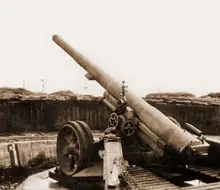
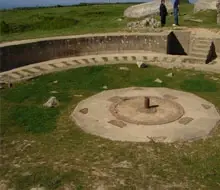
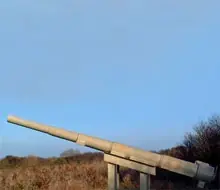
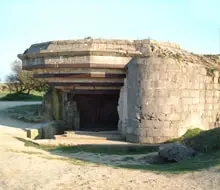
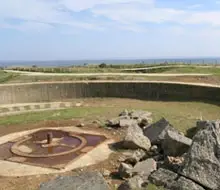
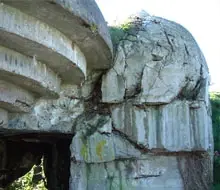
Drive to the end of the road, from there, you can view a wonderful panorama on Mulberry B. Now drive back to the 4 casemates installed by the Germans from December 1943 and just finished in June (althrough, the range finder was still in his wooden box). The Battery is in an ideal position, 215 feet above sea level and was well able to threaten the Invasion fleet. It consists of 4 Krupp 152mm, TbtsK C/36 (L/45) cannons from a de-commissioned destroyer, in type M272 Casemates with a range of 12.5 miles and a large, range-finding and observation post type M262 (No. 83). From May 28th and 29th, June 3rd, 4th and 5th, the site was bombed 5 times including the two heaviest raids in the week before D-Day totalising 1500 tons of bombs dropped on it. During the last night, 99 heavy bombers dropped their bombs inaccurately and killed 7 civilians.
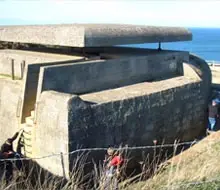
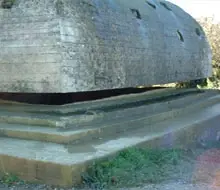
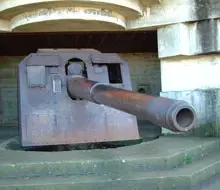
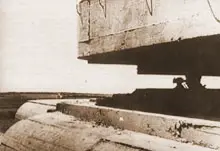
At 05.30 am Captain Weld commanding HMS AJAX engaged the battery with its 6'' guns, no reply from the German. At 05.37 the German gunners fired 10 salvos against USS EMMONS and then at 05.42 against USS ARKANSAS which faced Omaha, 10 miles off shore. ARKANSAS accompanied by FNFL GEORGES LEYGUES and HMS AJAX fired 20 shells of 12.2'' and 110 of 6''. HMS AJAX shot 114 shells of 6''. Battery seems to be silenced.

At 05.57 the Germans tried to sink the HMS BULOLO «the British Flagship» headquarter of the 50th Division. The accuracy of the battery forced the ship to weigh anchor.
At 06.05 position 1 and 2 engaged ARKANSAS once more and also the G. LEYGUES and FNFL MONTCALM; the ships joined HMS AJAX to secure the position, which seems to be reduced to silence at 06.20. But in the following 2 hours, sporadic fire occurred.
«Ajax» was joined by HMS «Argonaut» in shelling the battery which was put out of action at 08.45. It had taken 179, 6'' and 5.25'' shells from the two cruisers. Two of the casemates received direct hits through their embrasures...
The French and the British both claimed the defeat of the battery as their own...
The two remaining guns opened up again in the late afternoon but were silenced by the French cruiser, FFS «Georges Leygues». The 120 survivors of the battery, out of 184 crew, surrendered the next day to the British 231st Infantry Brigade. The battery had fired a total of 115 rounds.
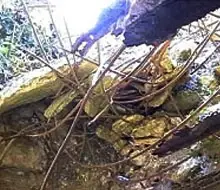


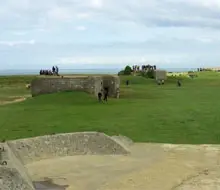
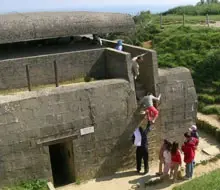
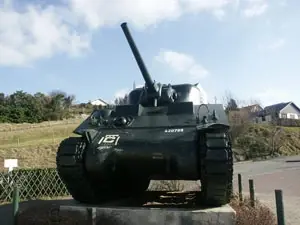
Arromanches was the site of the British Mulberry (Mulberry B), and today its remains dominate the seascape of this small port.
The artificial ports were the brainchild of Winston Churchill, who said he conceived the idea in 1917. Twenty-seven years later, two were actually constructed: Mulberry A at Omaha Beach (rendered unusable by the storm of 19-21 June) and Mulberry B at Arromanches. They were composed of several elements floating breakwaters (Bombardon) forming an outer protective circle, concrete caissons (Phoenix) and derelict ships sunk to form the perimeter of the harbor, pierheads which could rise and fall with the tide, and floating metal piers connecting the pierheads to the shore. All elements were constructed in England and towed across the Channel beginning on D-Day plus 1. Some 500,000 tons of supplies had been off-loaded through Mulberry B by the end of August. Whether or not the Mulberries were essential links in the supply chain is debatable, but as Chester Wilmot pointed out, the fact that they were to be built gave Neptune planners the assurance that, failing all else, forces ashore could be adequately supplied. That assurance was worth a great deal in early 1944. From the museum, it is possible to drive to the top of the bluffs east of town, where there is a Sherman tank, and a short distance further is a German radar station, next to an overlook platform that provides an excellent view of the port and the remains of Mulberry B. The visible bunkers from the cliff top were silenced by fire from HMS Belfast, which is now at rest in the Thames in London.
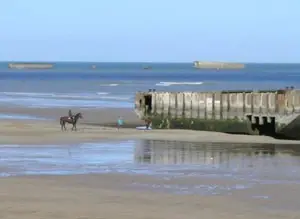
Each Mulberry harbor consisted of roughly 6 miles of flexible steel piers (Whales) that floated on steel or concrete floats (called Beetles). The pier end was great pier head, called Spuds pontoon that were jacked up and down along long legs which rested on the seabed. These structures were to be sheltered from the sea by lines of massive sunken caissons (called Phoenixes), lines of scuttled ships (called Gooseberries), and a line of floating breakwaters (called Bombardons). It was estimated that construction of the caissons alone required 330,000 cubic yards of concrete, 31,000 tons of steel, and 1.5 million yards of steel shuttering.
OREP
15 Rue de Largerie
14480 Cully
Tel: 02 31 08 31 08
info@orep-pub.com
«Piers for use on beaches: They must float up and down with the tide. The anchor problem must be mastered. Let me have the best solution worked out. Don't argue the matter. The difficulties will argue for themselves.»