On June 6th, 1944, Gold Beach marked the center of the D-Day landings. Here, the British 50th Infantry Division, supported by tanks of the 8th Armoured Brigade, faced strong resistance as they assaulted the German defenses around Le Hamel, Asnelles, and Ver-sur-Mer.
Despite heavy coastal batteries and flooding inland, British troops pushed through and captured Arromanches, where the Allies would soon assemble one of the greatest engineering feats of the war: the Mulberry Harbour.
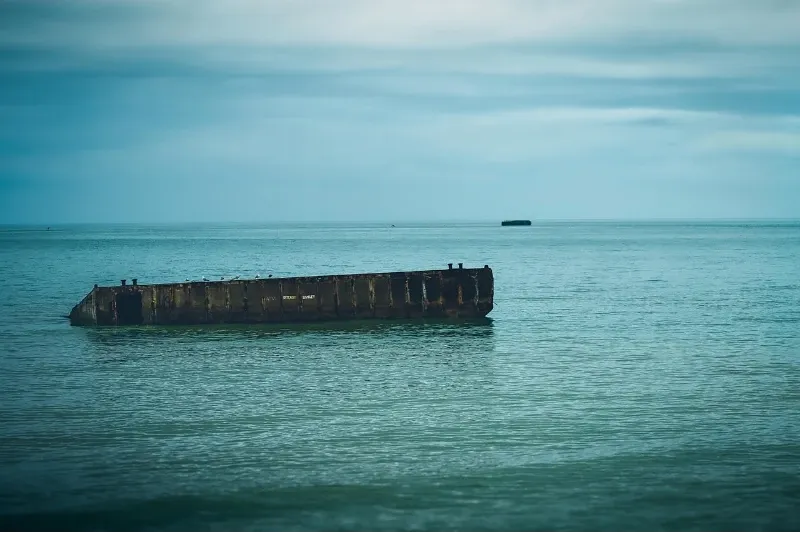
Gold beach, Normandy
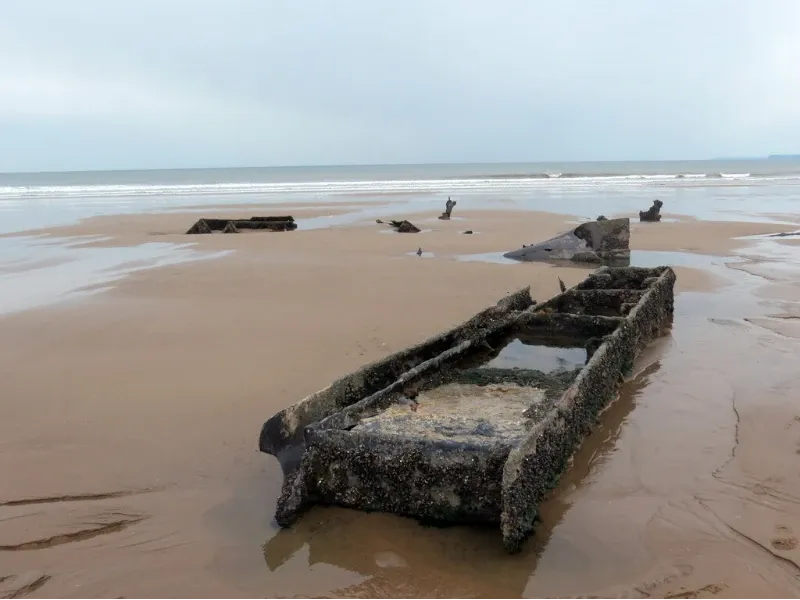
Remains of Mulberry Harbour, Gold beach
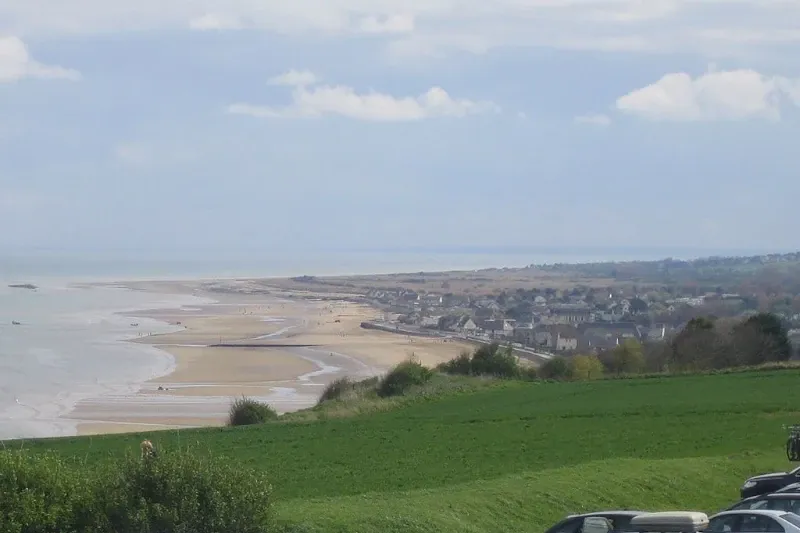
Gold beach from cliffs
Gold Beach stretches roughly 8 kilometers between La Rivière and Arromanches. The first wave landed around 7:25 a.m. under intense fire from German positions overlooking the beaches. Sea walls, mines, and anti-tank obstacles slowed progress, but specialized “Hobart’s Funnies” tanks helped breach defenses.
By midday, the British had secured Le Hamel and Ver-sur-Mer, allowing the soldiers to move inland. By evening, they joined Canadian forces advancing from Juno Beach to the east and were preparing the ground for the construction of an artificial harbor at Arromanches.
Gold’s success provided the logistical backbone for the Allied campaign in Normandy, turning a narrow beachhead into a gateway for hundreds of thousands of troops and vehicles.
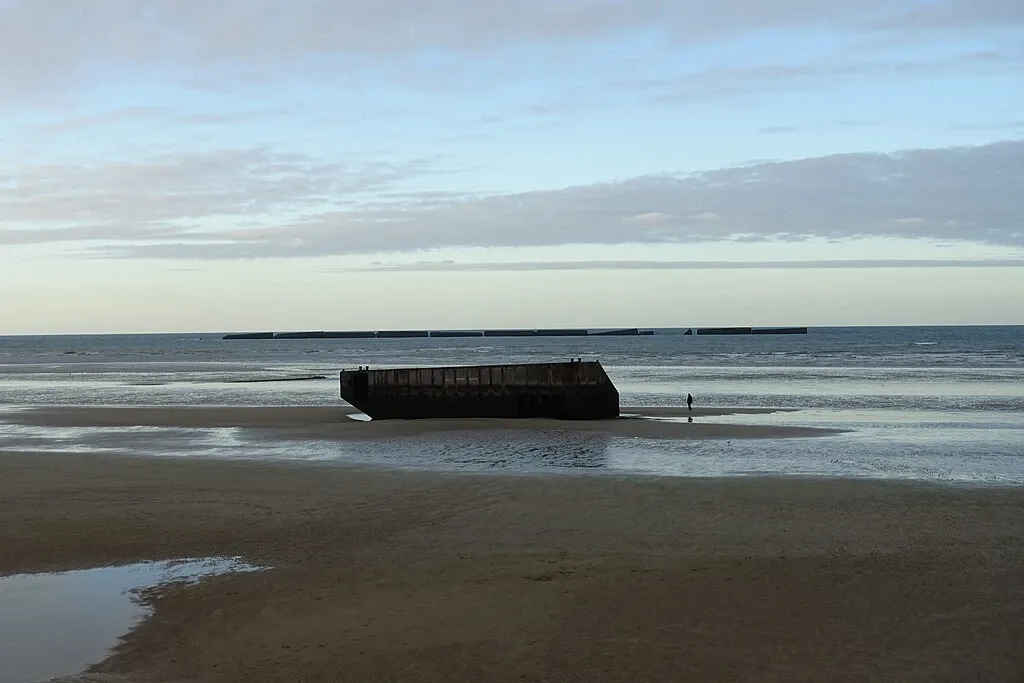
Gold Beach was both a battlefield and a logistical masterpiece. Within days of D-Day, Mulberry Harbour, the British artificial harbour, was fully operational, unloading thousands of tons of equipment and supplies each day.
Although often overshadowed by Omaha and Juno, Gold was essential to the success of Operation Overlord: it ensured the continuity of the front and the link between British and American forces. Learn more about the Gold sectors (lien livre).
Gold Beach combines battlefield history with visible engineering remains: where sea, strategy, and human courage meet.
Main sites and memorials :
To get the complete overview of the Gold beach landing discover our British landing sectors 2 Day tour.
To experience the full British and Canadian story, combine Gold Beach with Juno and Sword beaches on our 1 Day British & Canadian Sectors Tour.
Have a look at our content to learn more about the other D-Day beaches.
The British aimed to capture Arromanches and link up with Canadian forces from Juno Beach, while securing ground for the artificial harbour that would supply the Allied armies.
The British 50th (Northumbrian) Infantry Division and the 8th Armoured Brigade led the assault, supported by Royal Navy bombardment and Royal Engineers clearing obstacles.
It was an artificial port made of floating concrete caissons and metal roadways. It allowed ships to unload directly onto the beaches, crucial for maintaining the Allied advance.
Yes. Some concrete remains are still visible offshore at Arromanches, especially at low tide, and can be seen from the cliffs or the beach promenade.
Plan at least 3 to 4 hours to visit the museum, the British Normandy Memorial and the Mulberry remains. Guided tours offer a deeper understanding of the sector : see our 1 Day British & Canadian Sectors Tour and British landing sectors 2 Day tour.