On June 6th, 1944, Juno Beach became one of the most fiercely contested Allied landing zones. The 3rd Canadian Infantry Division, supported by the 2nd Armoured Brigade, landed along the coast between Courseulles-sur-Mer, Bernières-sur-Mer, and Saint-Aubin-sur-Mer.
The first waves faced deadly crossfire and mined beaches, suffering heavy losses. But within hours, Canadian troops had breached the Atlantic Wall and advanced further inland than any other Allied force on D-Day.
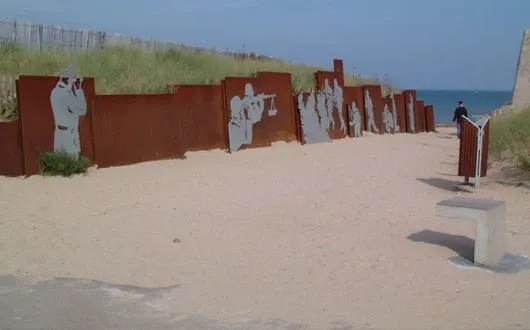
Juno Beach, Normandy
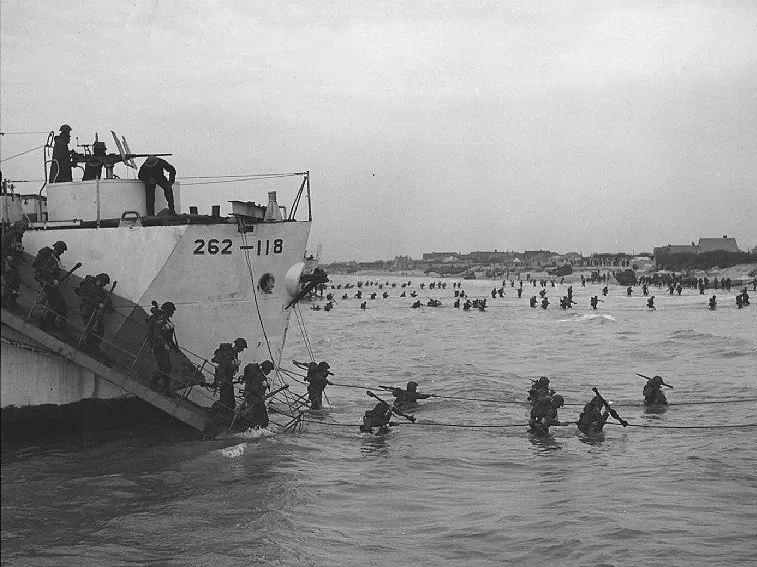
Juno beach landing, archive image
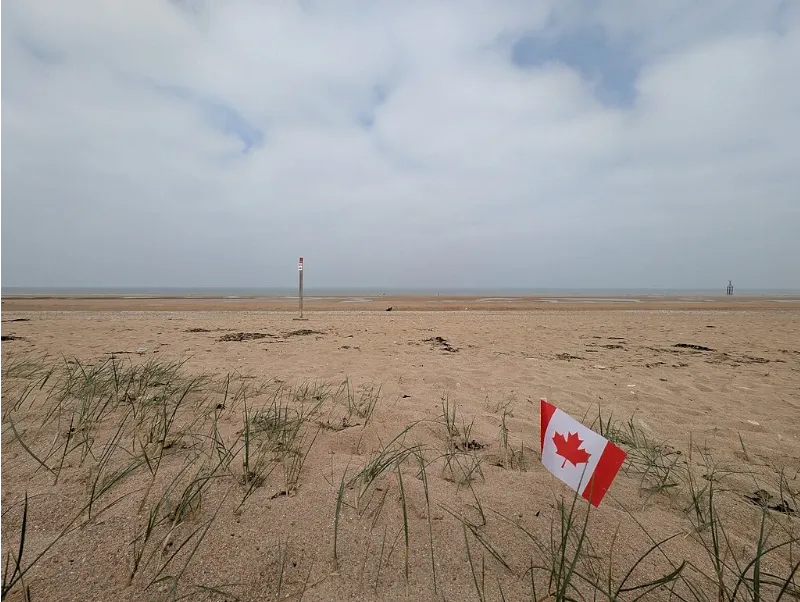
Flag of Canada on Juno Beach
The assault began shortly after 7:45 a.m., delayed by rough seas and strong wind.
When the landing craft reached shore, they encountered deep water, anti-tank obstacles, and dense minefields. Despite intense fire, the Canadians pressed forward with determination.
By midday, the villages of Courseulles, Bernières, and Saint-Aubin were in Allied hands. The armored units broke through to the Caen-Bayeux road, pushing further inland than the British at Gold or Sword. Juno’s success came at a high price : 1,074 Canadian casualties, including 359 killed.
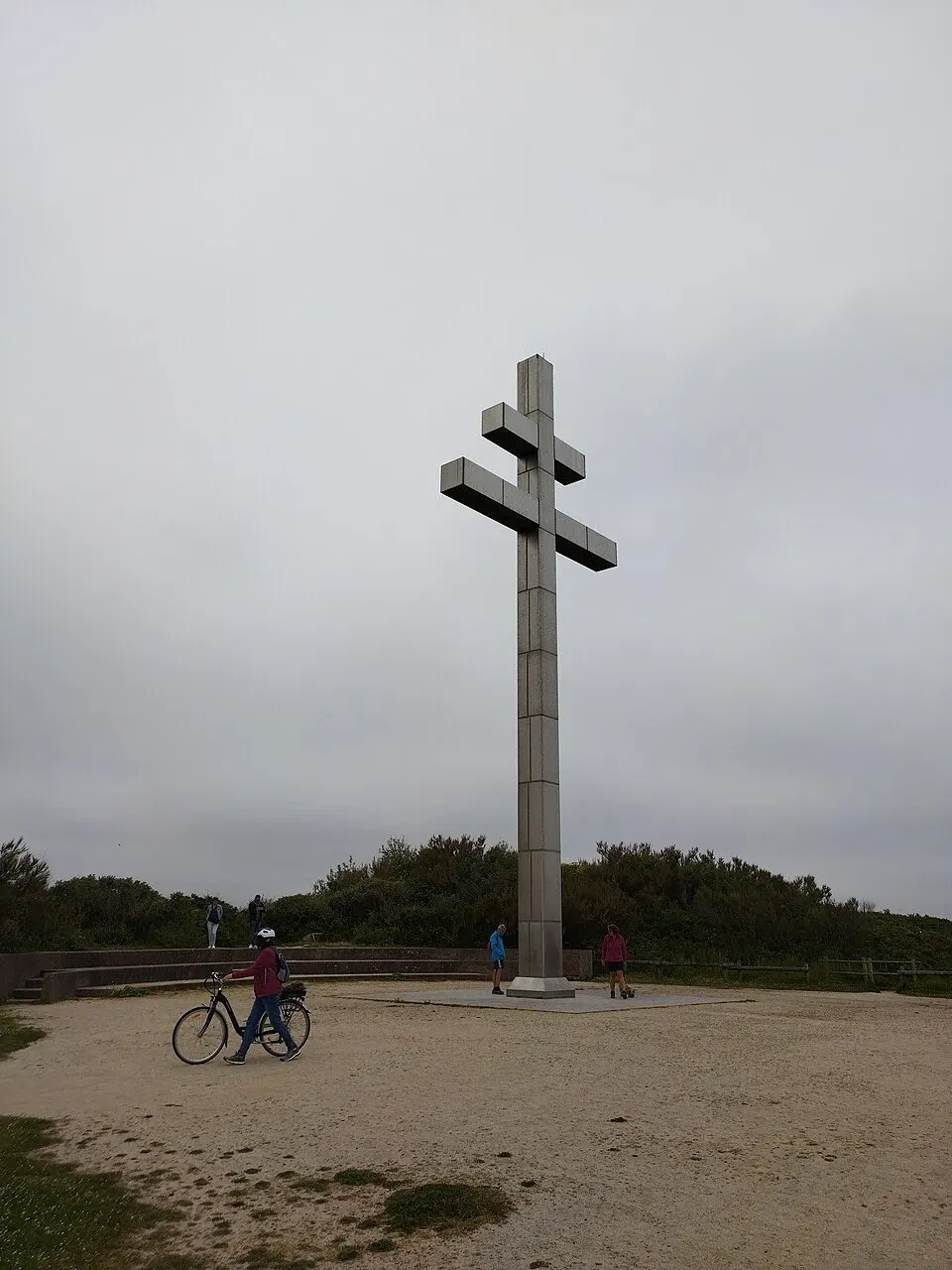
Lorraine Cross on the dune overlooking Juno beach
Juno Beach symbolises the courage and independence of Canadian forces in the Second World War.
It was their first major amphibious operation, and they fought not only to secure the beach but to link up with British forces on both flanks, creating a continuous Allied front.
The Canadians later played a decisive role in the Battle of Caen and in closing the Falaise Pocket, marking some of the hardest fighting of the Normandy campaign.
Learn more about the Juno sectors (lien livre).
Juno Beach offers a perfect blend of preserved battle sites, museums, and memorials, creating a moving and educational visit for all generations.
Main sites and memorials :
To explore the full Canadian story, discover our 1 day Canadian & British Highlights Tour or our 2 day Canadian D-Day Tour.
Have a look at our content to learn more about the other D-Day beaches.
The 3rd Canadian Infantry Division, supported by the 2nd Canadian Armoured Brigade, led the assault, landing across three villages : Courseulles, Bernières, and Saint-Aubin.
The Germans had fortified the sector with anti-tank walls, bunkers, and artillery, expecting an Allied landing near Caen. Many defenses were built by the 716th Infantry Division and reinforced by coastal guns from nearby batteries.
Juno combines the intensity of combat seen at Omaha with the success of the British landings : the Canadians advanced furthest inland on D-Day, despite suffering major losses in the first wave.
Absolutely. It is one of the best-curated D-Day museums in Normandy, offering immersive exhibits, artifacts and personal stories of Canadian soldiers and civilians.
Allow around four hours to explore the Juno Beach Centre, the bunkers, and the surrounding memorials. Guided tours add valuable historical context : see our 1 Day British & Canadian Sectors Tour and Canadian D-Day 2 Day tour.