On the morning of June 6th, 1944, Omaha Beach became the most difficult and tragic of all Allied landings. Stretching over eight kilometers between Vierville-sur-Mer and Colleville-sur-Mer, this sector was assigned to the U.S. 1st and 29th Infantry Divisions under General Omar N. Bradley.
Here, strong German fortifications, steep bluffs, and rough seas combined to create chaos. Yet, by nightfall, American forces had secured a fragile beachhead, opening the way to Normandy’s liberation.
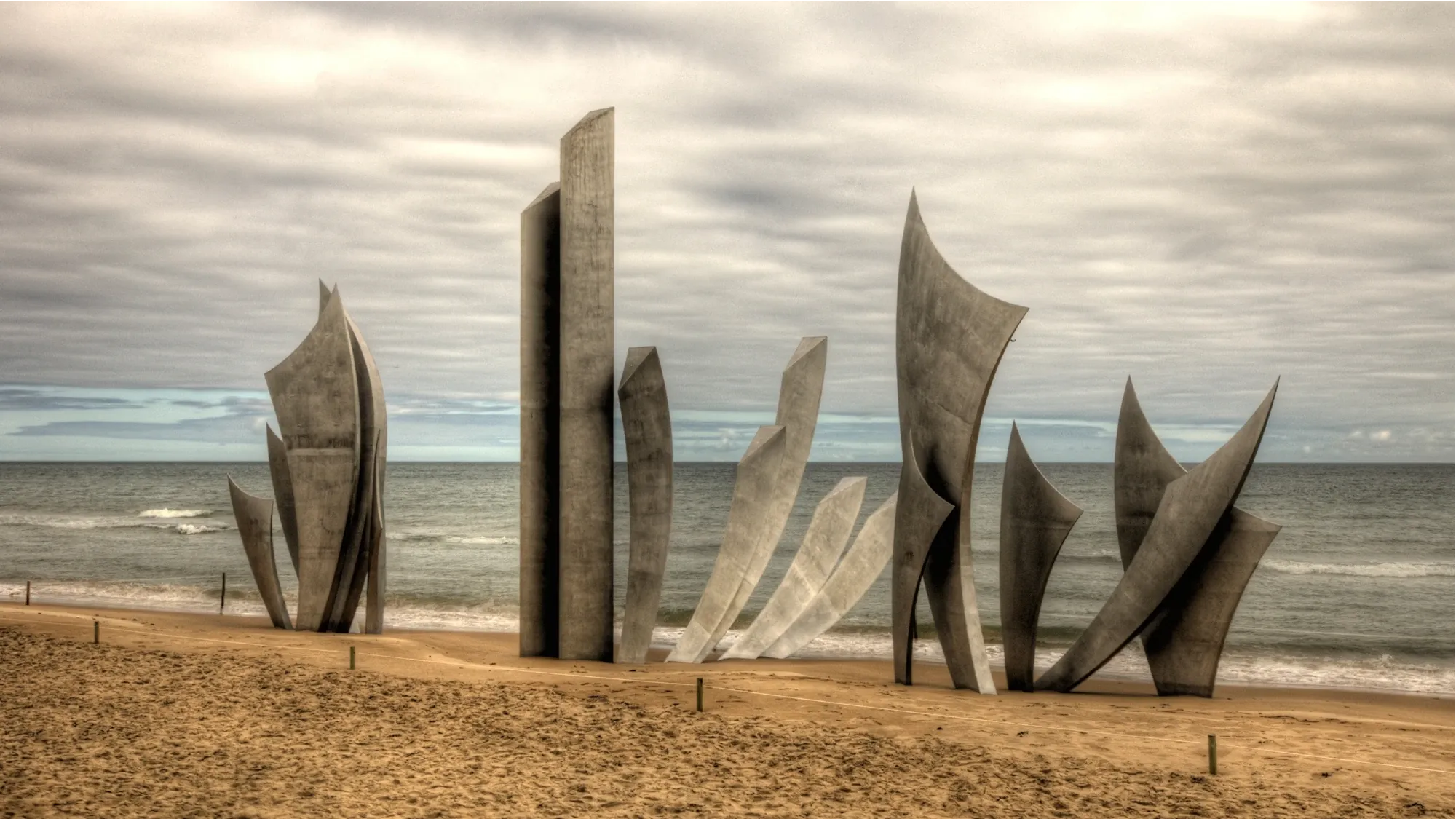
Omaha Beach, Normandy
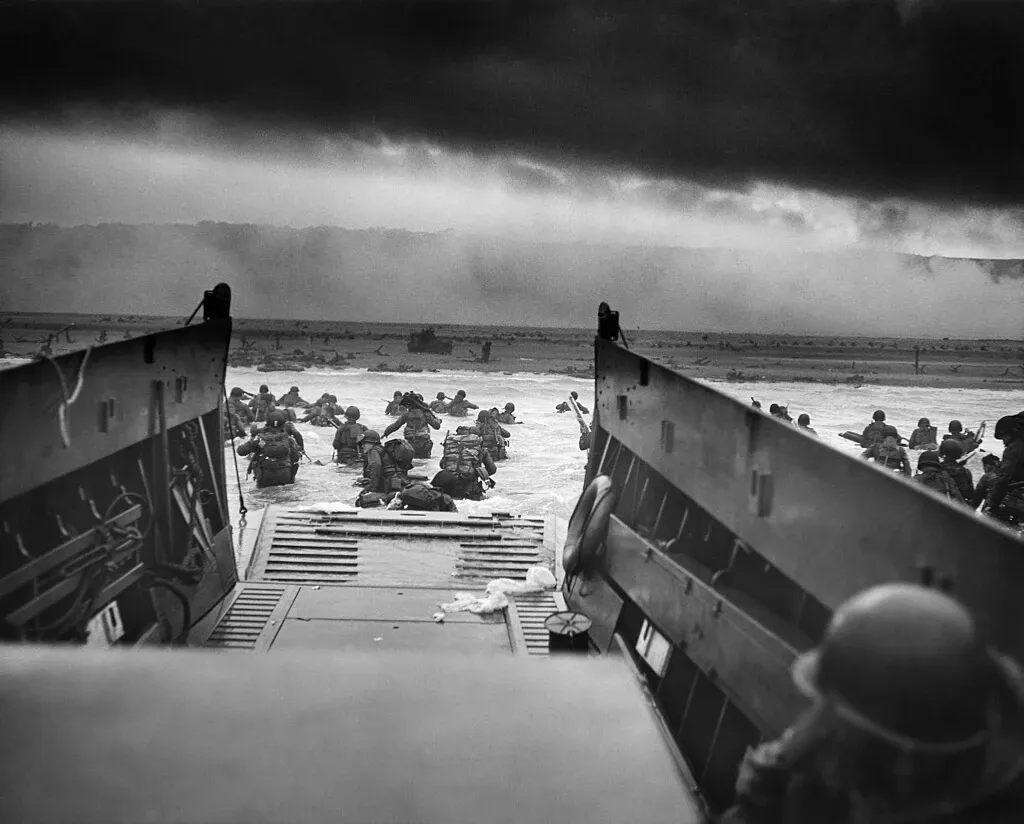
Omaha beach landing, archive image
The first wave hit the sand around 6:30 a.m., facing withering fire from German machine guns positioned on the bluffs. Many landing craft drifted off course; tanks sank in rough seas; engineers struggled to clear obstacles under fire. Casualties were devastating: in some companies, over 70% of the men were lost within minutes.
Despite this, small groups of survivors found ways up the cliffs through the draws at Vierville, Les Moulins, and Colleville. By mid-afternoon, thanks to their persistence and naval gunfire support, the line had broken.
Omaha’s beachhead was costly but decisive: by the evening of June 6th, the Americans had secured enough ground to link up later with British forces from Gold Beach.
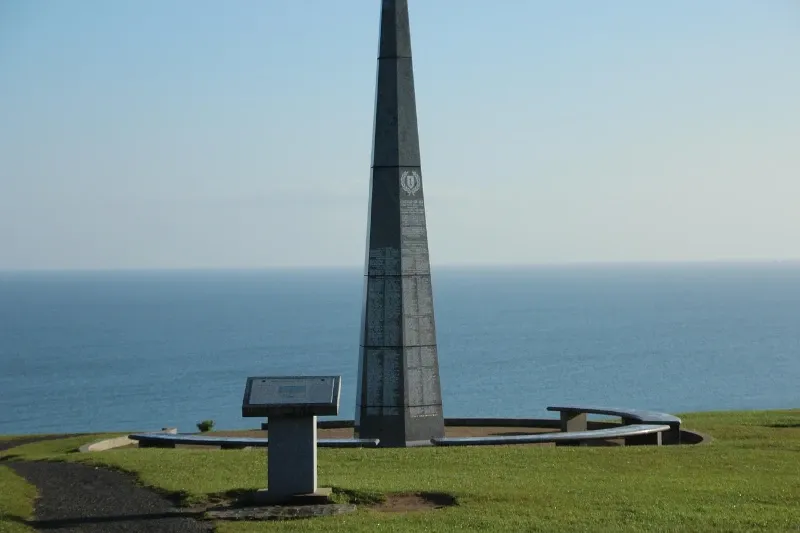
Omaha became the symbol of Allied sacrifice and determination. It was here that the human cost of Operation Overlord was most visible: more than 2,000 American soldiers were killed or wounded within the first hours of the assault. The battle demonstrated how planning met the brutal reality of war. Yet, from those chaotic beginnings emerged one of the greatest feats of courage in modern history. Learn more about the Omaha sectors (lien livre).
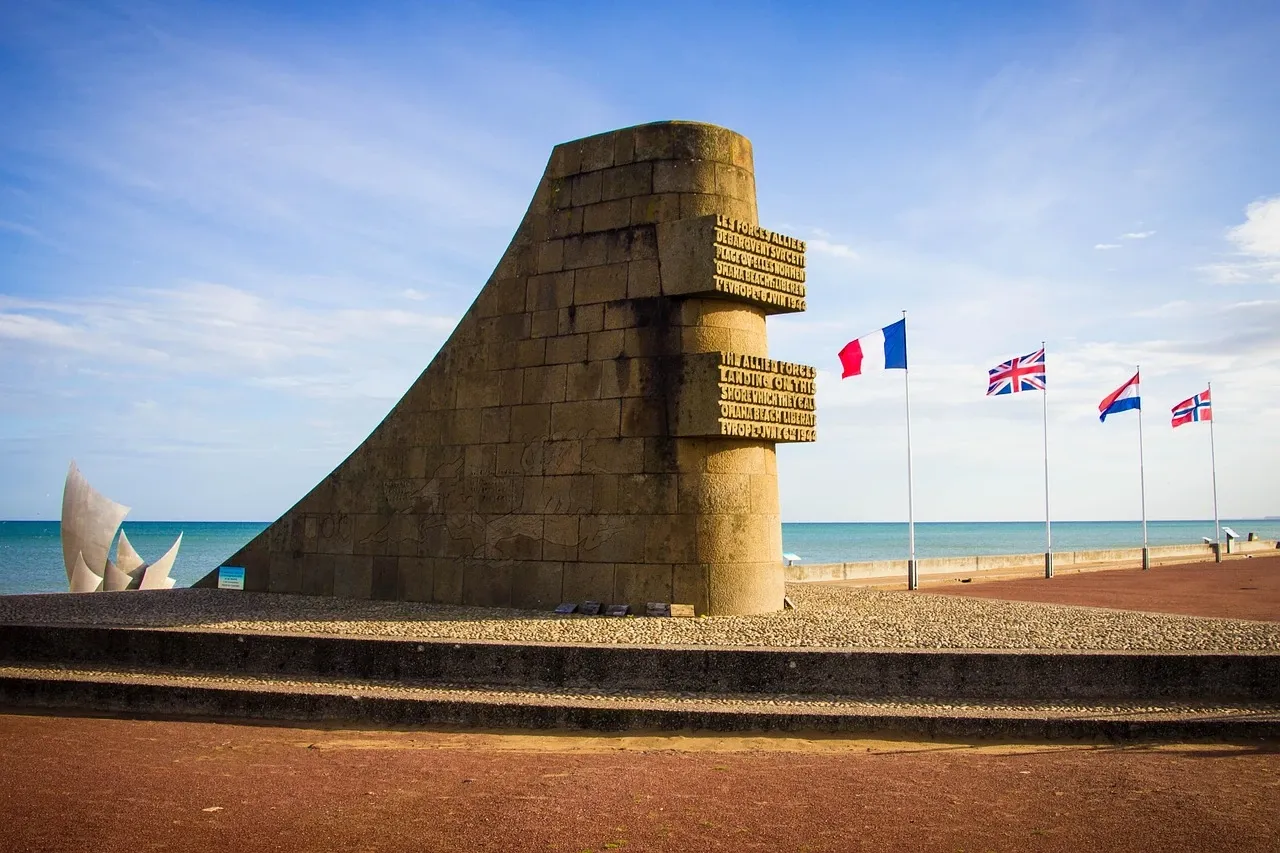
Omaha today is both a peaceful coastal landscape and one of the most powerful memorial sites in Europe. Its museums and cemeteries invite reflection on the price of freedom.
Main sites and memorials :
To understand the full story of D-Day, you can combine Omaha with Utah on our 1 day American Sectors Tour or experience the entire Normandy landings with our 2 day five D-Day Beaches Tour.
Have a look at our content to learn more about the other D-Day beaches.
Because of the terrain and the defenses. German positions were built into the cliffs with interlocking fields of fire. The rough seas, strong currents, and poor visibility also scattered the landing craft, leaving units disorganized and exposed.
The U.S. 1st Infantry Division (“Big Red One”) and the 29th Infantry Division carried out the assault, supported by engineers, tanks, and naval artillery.
The beachhead was established by the evening of June 6th, but heavy fighting continued inland for several days, especially around the villages of Colleville and Saint-Laurent.
Yes. The site is open year-round. The beach, cemetery, and museums are all accessible.
Yes, they’re only 45 minutes apart.
Our 1 day American Sectors Tour covers both beaches and major airborne sites for a complete perspective.